
As with all things in life, there are pros and cons to cutaway trucks and box trucks. It's wise to consider both the perks and faults of each option to help you make the best choice for your needs. Consult the chart below for a brief overview of the pros and cons.
When purchasing your next work-ready model, taking a moment to compare a cutaway van conversion vs. a box truck could help you understand the differences between the two. While many locations use these models interchangeably, our Jim Ellis Commercial team knows the differences that a dealership uses to differentiate your cutaway chassis from a hard-working box truck. Let's dive into how, so you can schedule an appointment and test one of the models with the utmost confidence.
This guide will outline what you can expect behind the wheel of a cutaway van as compared to your experience with a box truck. Depending on the brand, they might be interchangeable, or there could be significant differences.
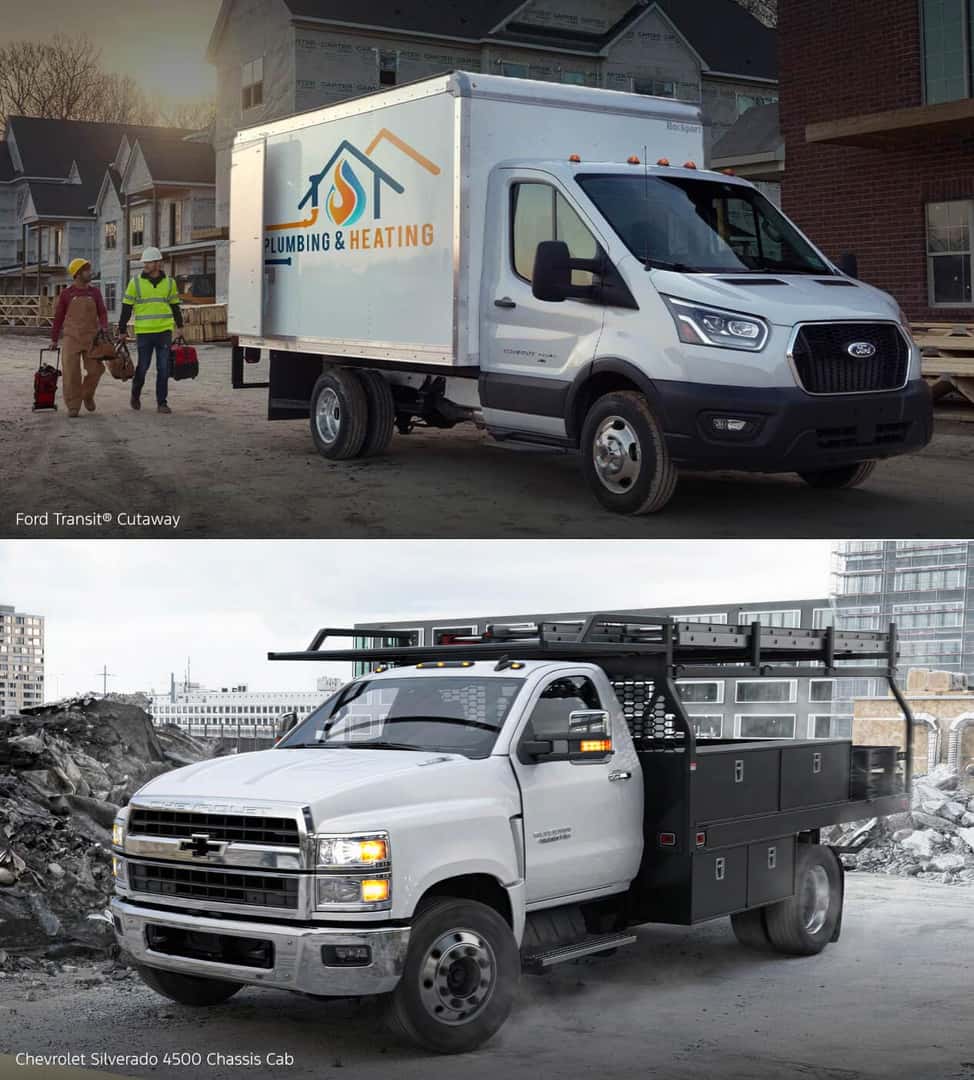
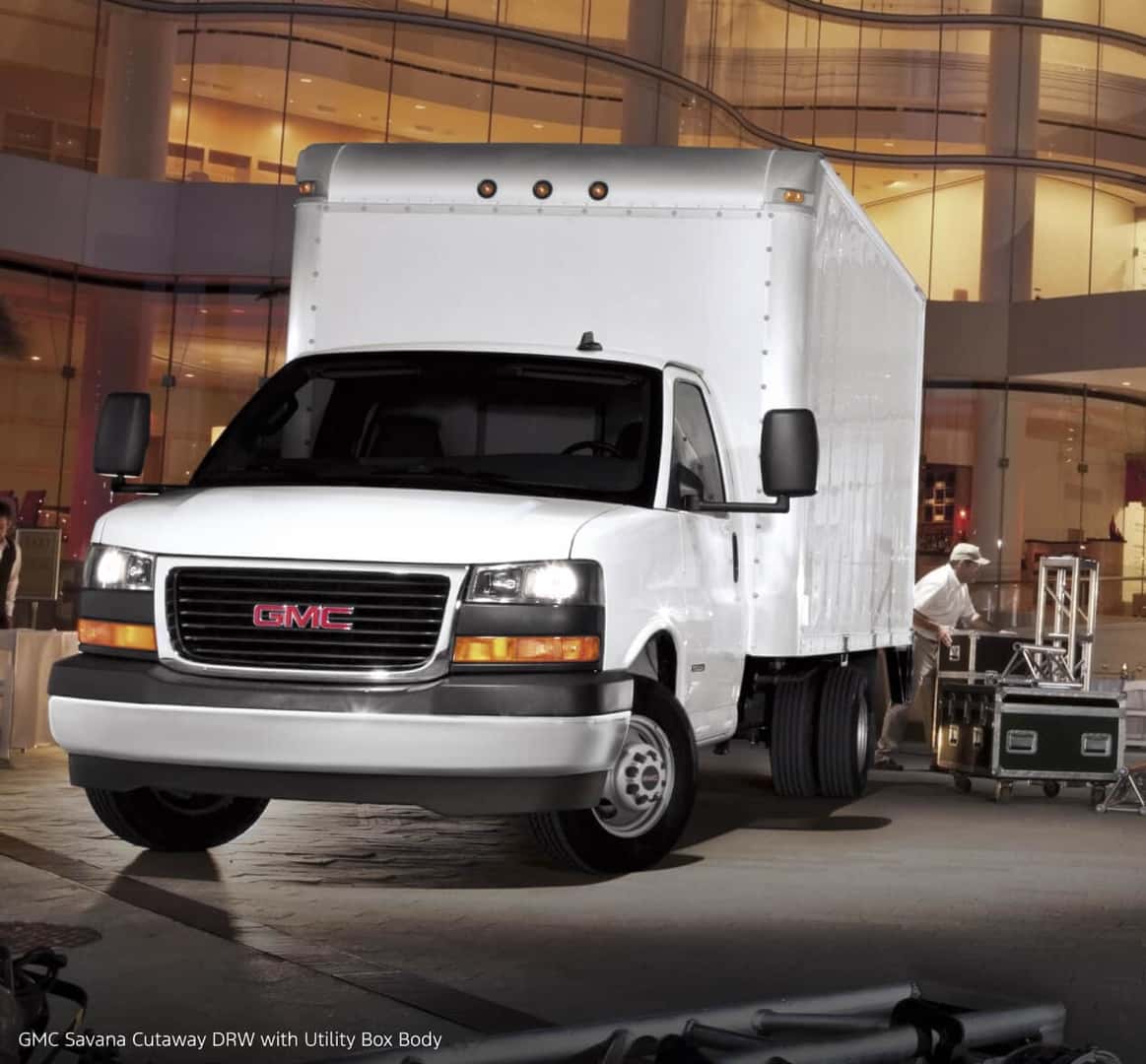
Cutaway vans refer to a style of truck with a one-row cabin and an extended bed frame for larger bodies. They are known as "cutaway" models due to being built to be separated from their bodies easily – whether they carry utility frames, enclosed cargo areas, or passenger units.
If you're prioritizing customization, a cutaway conversion van is a must-have option. Say you're working on your site with your cutaway van and suddenly realize you'll need a dump trailer to handle spare debris. A cutaway base lets you remove the current truck body, swap it for a dump truck, and store the previous body elsewhere. Then, when you finish dumping your debris, it's much simpler to put the original configuration back together.
The only real limitation that cutaway models have is that they tend to be single-cabs – that is, cabins with enough room for three passengers to sit side by side. That's typically enough for most worksites, but it may be too cramped for some teams to work efficiently.
A box truck is a specific kind of cargo vehicle, known for its enclosed cargo area. Many box trucks are a type of cutaway cargo conversion van, but the key difference with a box truck is the body. You can safely expect this truck's body to be the "box," or enclosed cargo area.
However, how a dealership decides to market its vehicles can make a huge difference, since "box truck" tends to encompass a wider range of truck sizes. At Jim Ellis Commercial, we often introduce our clients to pickup models when their cargo requirements are lower. For example, a Ford F-250 with utility upfitting and a closed bed may be the preferred model if your work doesn't require a payload capacity of thousands of pounds. Box trucks can also have crew cab configurations, which fit six or more passengers with a shorter bed, while a cutaway van conversion is almost universally a three-seat model.
However, in most cases, the box truck will use the long, powerful core of a commercial-grade truck to maximize cargo space. As you'll see in our cargo vans vs. box trucks comparison, these models are built for the job site and are perfect if you're looking for a reliable cargo machine.
Where the box truck starts to fall behind compared to a cutaway van conversion is in customizability. While many box trucks are cutaways, the ones that aren't will not have as easy a time removing or swapping their beds. That can make the cutaway van conversion vs. a box truck cost comparison favor the former, thanks to easier maintenance work and the potential to purchase a pre-made body, rather than having to upfit an existing one.
Because these two kinds of trucks can be used interchangeably, most major commercial brands will offer capable models for any worksite. Here are just a few options that we have in stock at Jim Ellis Commercial.
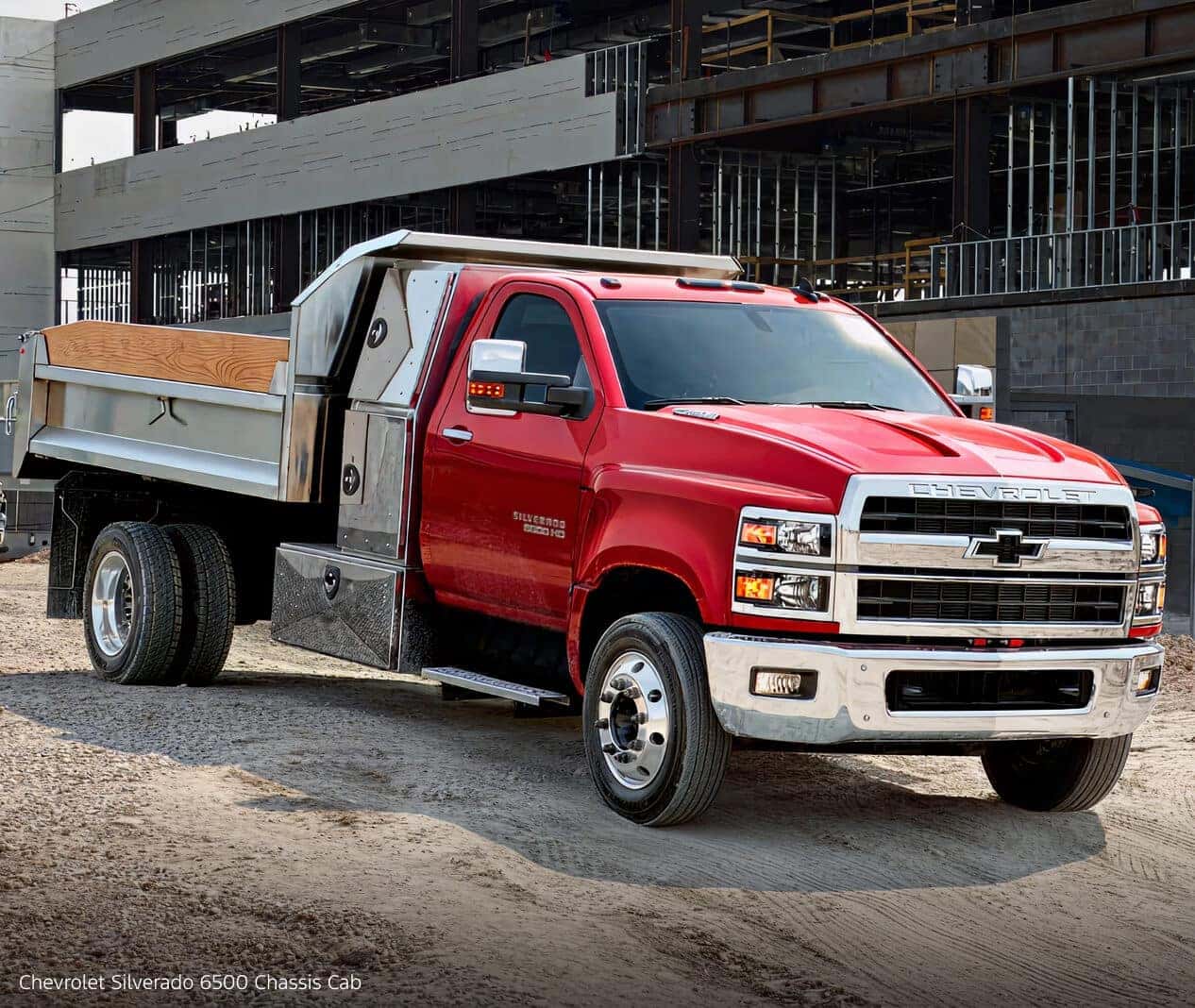
Chevrolet models are dynamic, versatile, and overall excellent options for any job site. The Chevrolet Express Cutaway Work Van is a classic model, supporting up to 8,920 pounds of payload with its optimal configuration.1 The cutaway edition can come with utility bodies, dump receptacles, Hi Cube alignments, and a simple but spacious box. Combine that with available features like aRear Vision Camera, Lane Departure Warning, and Forward Collision Alert, and you'll soon see why many employers decide to take this dynamic vehicle as their own.
Your selection of box trucks is even more dynamic. A Chevrolet Silverado 4500 HG LCF, for instance, offers up to 20-foot tall boxes, while standard pickups like the Colorado and Silverado become the clear choice for urban workers who only need a certain amount of enclosed cargo space. Our team is capable of ordering even larger box trucks, like the Chevy Silverado 6500 HD, to upgrade your overall GVWR and handle nearly any work.
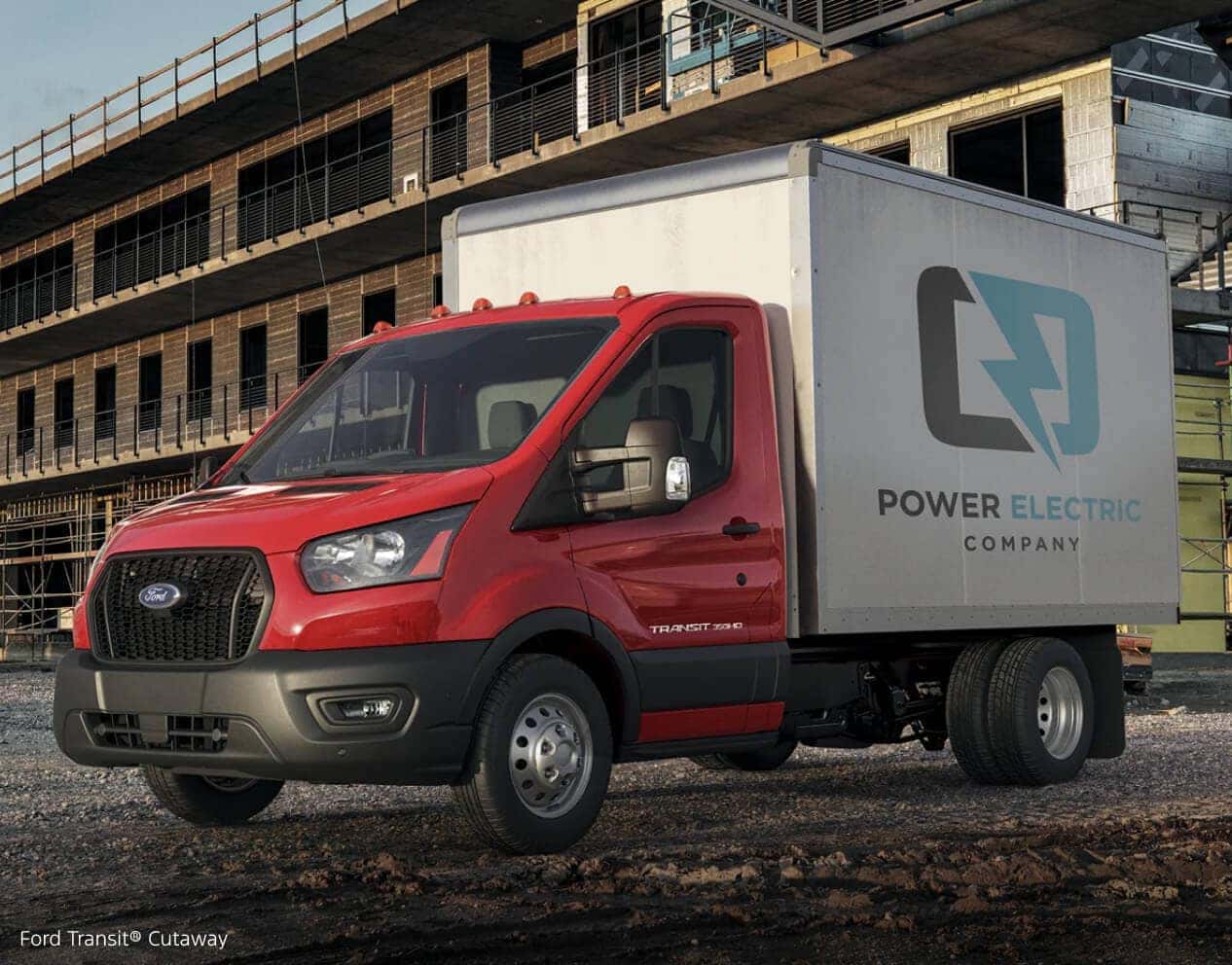
Ford models have two major cutaway options. The first is the well-known Ford Transit, a comfortable option in the cutaway sphere. The 2024 Cutaway model comes with available AWD and Ford Co-Pilot360® technology. It has a lower payload capacity than the Chevy Express, but compensates with significantly improved upfitting options from Ford Pro. The E-Series Cutaway brings 65 years of evolutionary innovation to your worksite, featuring a 14,500-pound GVWR.
Ford box truck options are similarly exquisite. Choose your cutaway base, and Ford Pro services can help you find a body that perfectly suits your career. Alternatively, the F-150, F-250, and F-350 pickup models can be upfitted with an enclosed cargo area. This is the preferred option for urban drivers and utility workers with smaller toolkits.
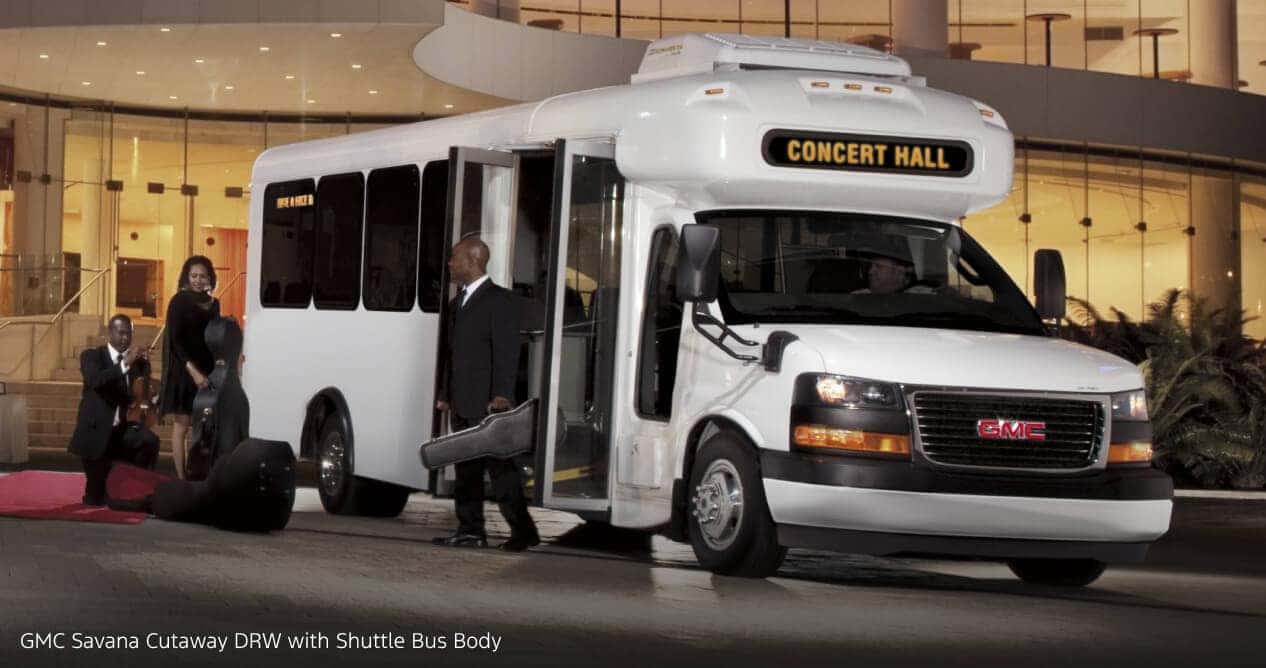
If you're looking for a cutaway with a history of incredible strength, the GMC Savana is for you. With a maximum payload of 8,920 pounds,2 this model utilizes systems like Stabilitrak and Hill Start Assist to smooth out your ride and elevate your worksite experience. The GM Upfitter portal is your one-stop shop for adding the body you need -- including configurations for box trucks.
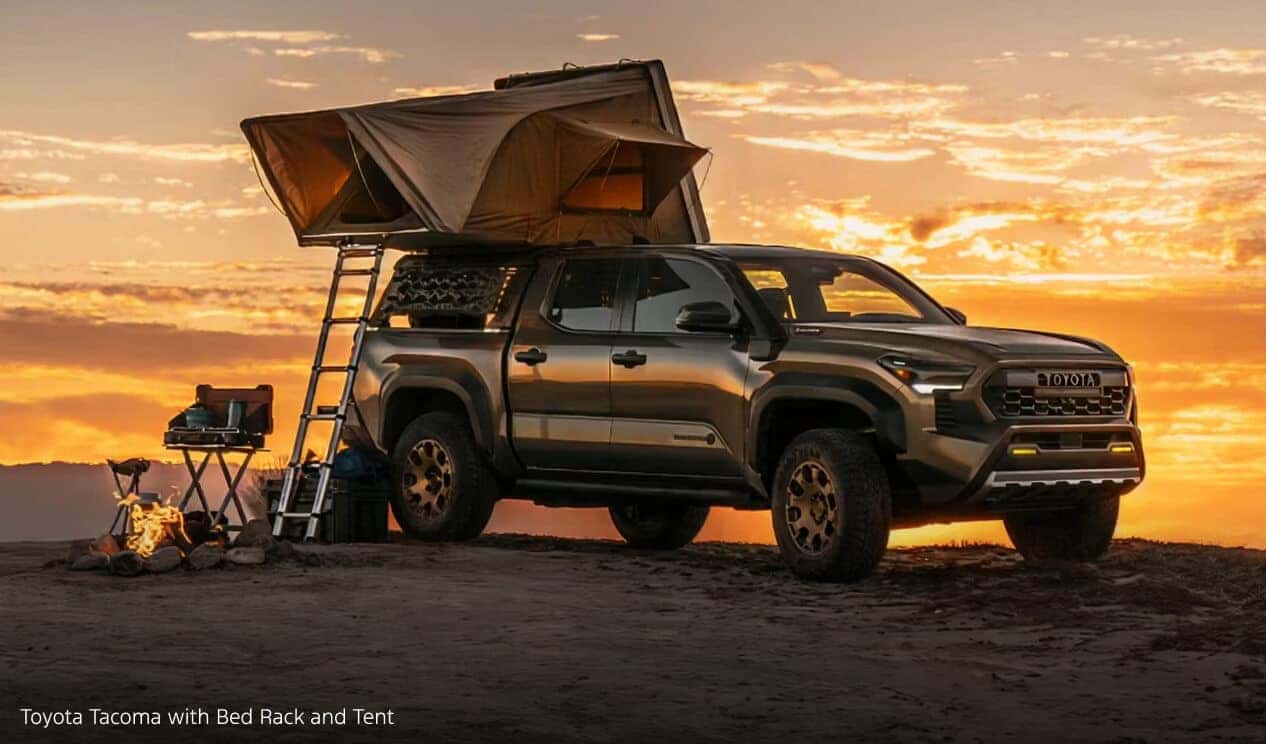
Toyota Tacoma pickups are a niche option for the service workers who want prestigious quality of life, without the incredible towing capacity required by a cutaway base. That isn't to say the Tacoma isn't exceptionally capable; with over 6,000 pounds of towing capacity,3 the Tacoma offers a valid middle ground between a smaller bed and a larger overall capacity. Haul a trailer behind you with all the gear you need, while still offering a box that can safely hold your equipment.
In most cases, the decision between taking home a cutaway van conversion vs. a box truck depends on your specific needs. If you want the potential versatility of an easily swappable body, significant payload capacity, and a more dynamic upfitting process, our inventory of cutaway bases is the ideal option. The cutaway body is also readily capable of performing as a box truck, so it typically fulfills the same needs.
However, if you need an extended six-man cabin, more pickup options, or don't require an easily-swapped body on your truck's frame, then a box truck should serve you well. Its enclosed cargo space and more dynamic model lineup should give you a wider variety of sizes, shapes, and passenger capacities when you shop our inventory at Jim Ellis Commercial.
A cutaway van conversion will generally have significantly more payload than a box truck, primarily because the cutaway van conversion guarantees a large, stable bed. Many box trucks come on the backs of models like the F-350, and might not have an extended frame to rest on. However, if you purchase the cutaway conversion, you are guaranteed a potent engine, large bed, and stability-focused suspension.
The main difference between these options is how complete their construction is. Where a cutaway van conversion may refer to a wide variety of utility vehicles, such as ambulances and minibuses, a box truck typically refers to a completed model that has a large container for storage on the bed. These terms can often be used interchangeably, so be sure to double-check that your purchase includes the necessary parts.
A box truck will typically have less curb weight than the variety of utility vehicles built on the back of a cutaway van conversion, making the former a great option for general drivers. Cutaway van conversions can include external storage bins, seating, and miscellaneous equipment, which may result in slightly increased stopping distance. Box trucks also can include more traditional pickup models, like a Toyota Tacoma, further improving maneuverability.
The maintenance cost of your cutaway van will often be higher than that of a box truck. That's because, while a cutaway van is guaranteed to be easily separated from its body which allows for more close inspections, all cutaway bodies are guaranteed to be large and sturdy commercial vehicles. Many box trucks are smaller, like a Ford F-350 with an enclosed bed, making them more readily fixed.
1For comparison purposes only. See the Owner's Manual and the label on the vehicle door jamb for the carrying capacity of a specific vehicle.
2These maximum payload ratings are intended for comparison purposes only. Before you buy a vehicle or use it to haul people or cargo, carefully review the vehicle loading section of the Owner's Manual and check the carrying capacity of your specific vehicle on the label on the inside of the driver's door jamb.
3Before towing, confirm your vehicle and trailer are compatible, hooked up and loaded properly and that you have any necessary additional equipment. Do not exceed any Weight Ratings and follow all instructions in your Owner's Manual. The maximum you can tow depends on base curb weight plus the total weight of any cargo, occupants, and added vehicle equipment. "Added vehicle equipment" includes additional standard/optional equipment and accessories added by the manufacturer, dealers, and/or vehicle owners. The only way to be certain of your vehicle's exact curb weight is to weigh your vehicle without passengers or cargo. [Calculated with the new SAE J2807 method.] Installation of a tow hitch receiver or other accessories located near the rear bumper or side-door kick sensors may require disabling or removing the kick sensor, and the sensor operation setting in your vehicle should be turned off. See Owner's Manual for limitations.

