
Purchasing the right delivery van is a critical aspect of simplifying your day-to-day operations and elevating your comfort when driving. From the easy-to-maneuver and lithe Chevy Express to the premium Mercedes-Benz Sprinter with a cargo area well over 500 cubic feet, the best cargo van options for your business can vary quite a bit. Cargo capacity, wheelbase, roof height, and driving experience are all important factors in ensuring your employees have a safe, healthy journey from client to client. But which of the most popular delivery vans should you have your eyes on? How should you customize them to best fit your needs?
At Jim Ellis Commercial, you'll have the opportunity to try several van options and pick the one that suits your cargo, towing, and front-row comfort needs. Let's look at the five best vans to get a perspective on which one fits you!
There are five notable delivery van options that you should keep your eyes on. The Ram ProMaster is a versatile, customizable cargo van with excellent cargo size and an adjustable roof. The incredibly reliable Ford Transit is known for its available AWD system and excellent towing and payload capacities. The GMC Savana is smaller but offers the highest towing capacity in our suggested lineup, while the Chevy Express is the same size as the Savana, making both easy to move through urban cities like Atlanta, GA. The Mercedes-Benz Sprinter is the final delivery van we suggest, thanks to its immense size and comprehensive array of comfort features – a fantastic choice for long-term investment.
When you shop delivery van inventories, your primary decision should be based on cargo volume and payload capacity. Do you need more trunk space for items like tall furniture or machinery? Or maybe you just need a cargo van for small items, and thus would prefer a tighter body that makes parking a breeze. No matter your decision, we recommend one of these five options for your business.
The Ram ProMaster is notable for its versatility. Few other cargo vans offer up to six-person seating in the front cabin, nor do they have up to four different cargo length options. If you plan to custom-order your best commercial van, the ProMaster is an excellent choice.

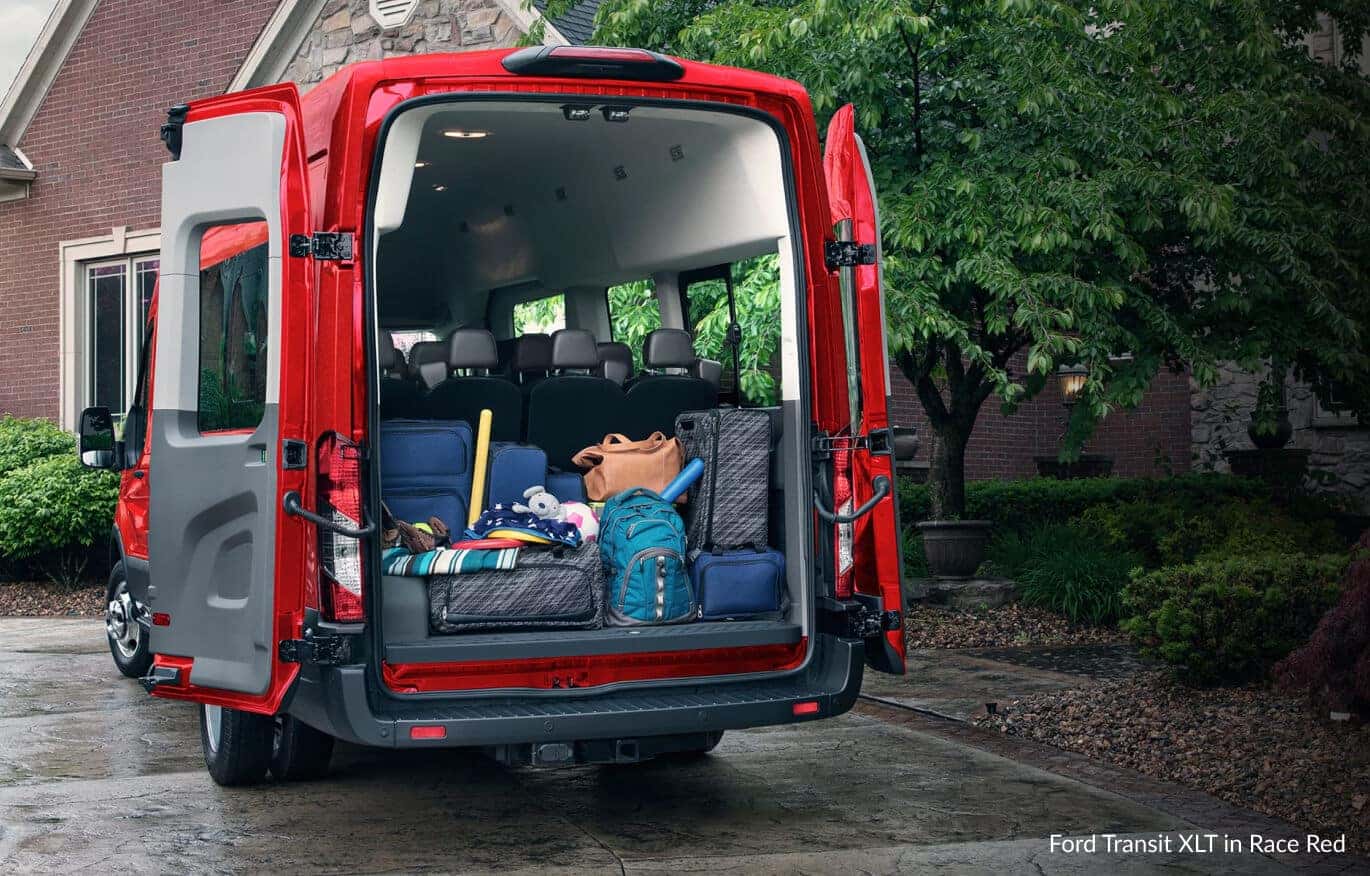
Many businesses tout the Ford Transit as the best choice for reliability, which is because of its general history as an easy-to-repair model that still boasts excellent cargo space. Our choice for the best reliable cargo van, the Ford Transit, boasts an electric variant, ample cargo space, and a diverse array of wheelbase and roof height combinations.
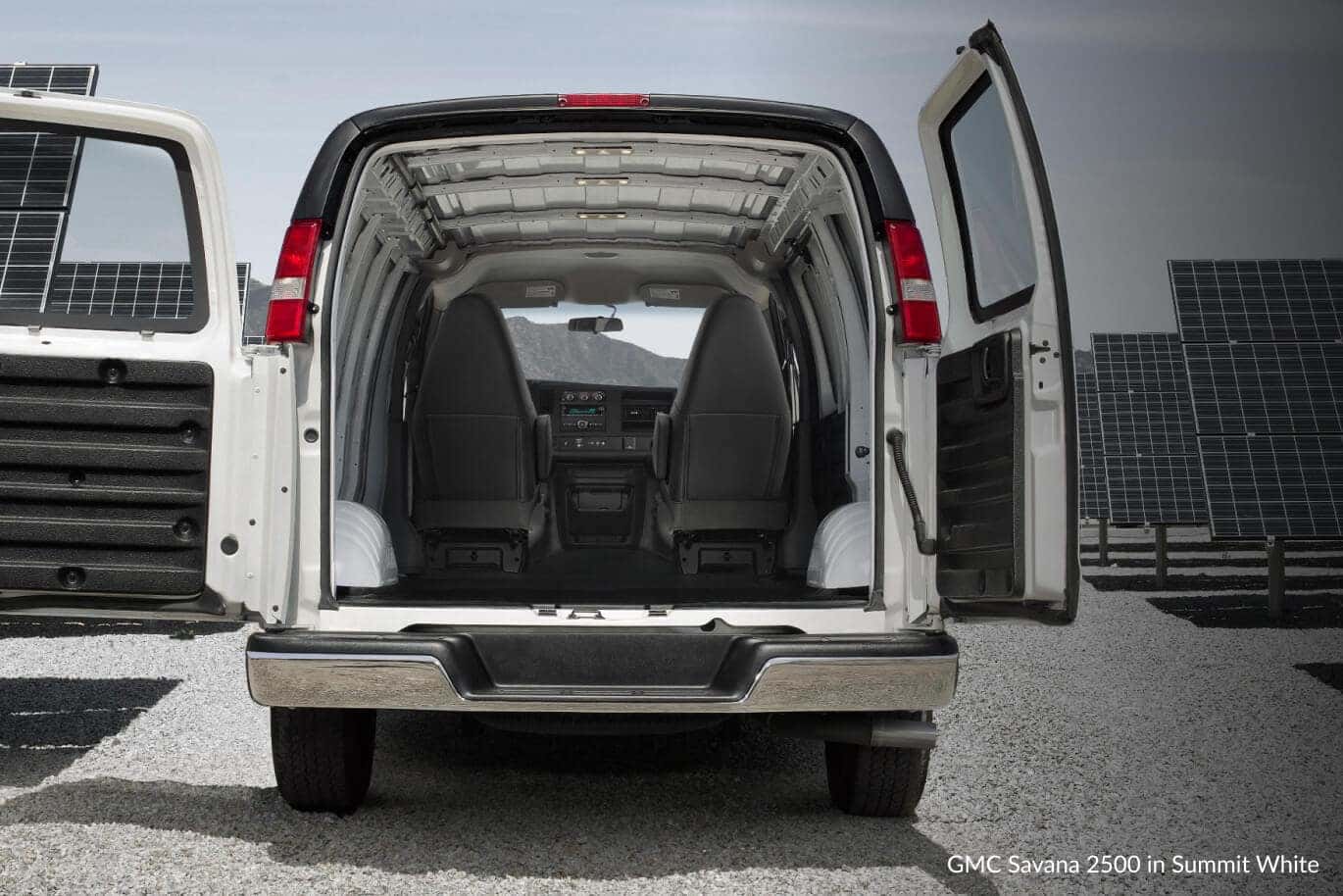
Straightforward and powerful, the GMC Savana hosts a potent available 6.6-liter V-8 engine that's the most responsive option in our inventory. While it has the lowest cargo space of the group, its 10,000-pound towing capacity when properly equipped makes it feel extraordinary if you need to move a trailer. It also comes in two configurations: a 2500 or 3500 model.
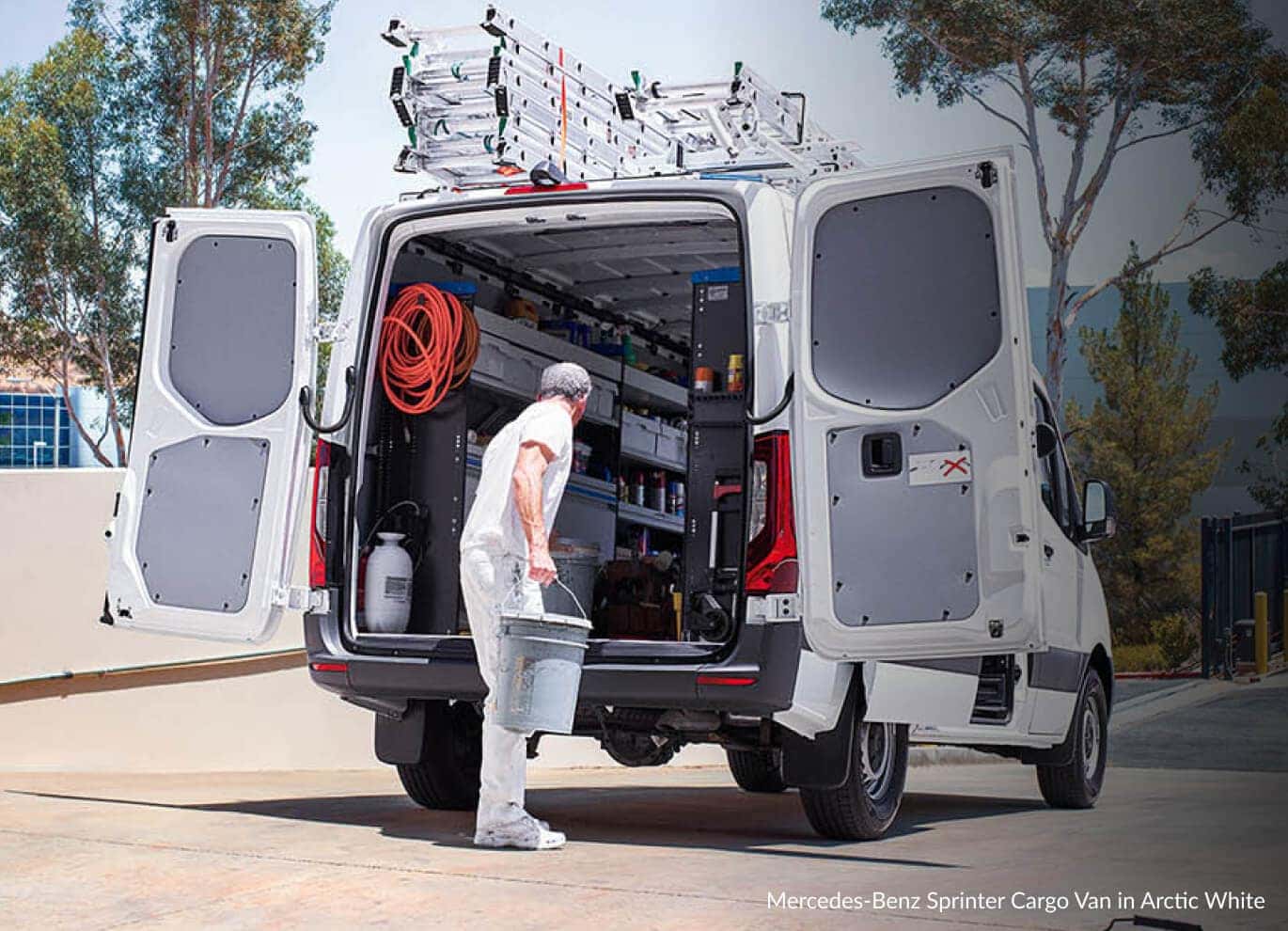
Similar to the Ford Transit, the Mercedes-Benz Sprinter offers dynamic performance and a reliable legacy. It has a diesel powertrain that comes in standard, high-output, or high-output AWD configurations and provides up to 533 cubic feet of storage space: the largest of the list. This makes it the best cargo van for small business owners who want to invest in a single vehicle.
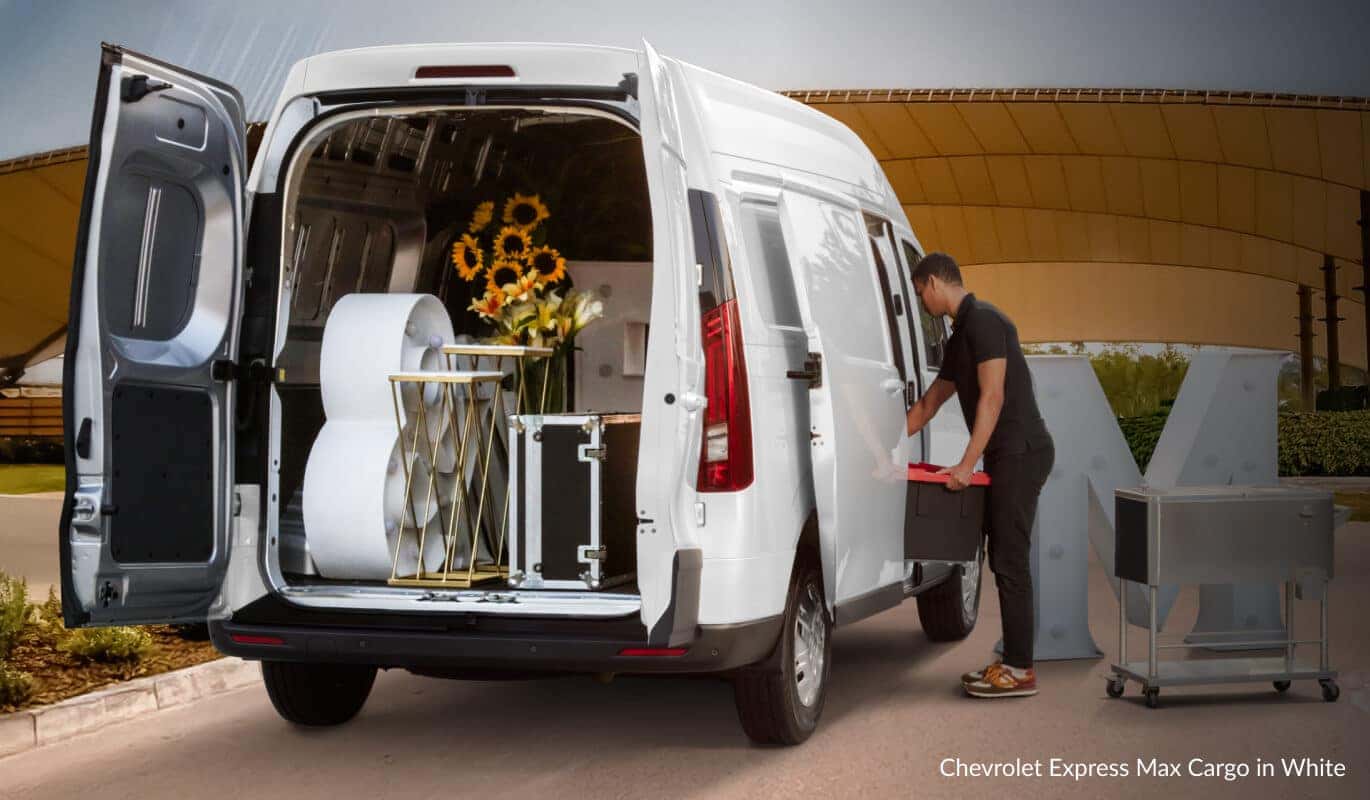
The final member of our lineup, the Chevy Express, can handle many different trailers with its available V-8 powertrain. At this time, the towing capacity is not confirmed by the OEM, so contact us for the latest updates.
Now that you know the varied specs of the five delivery van choices we've laid out, which businesses would like each one the most? Let's touch on a few industries where a cargo van can lend a hand, for example:
For advice that caters to your organization's needs, please contact Jim Ellis Commercial. Our representatives will work with you to find the perfect model.
While few cargo vans have incredible fuel economy, many websites cite the Ford Transit as one of the most consistent performers in this category. However, since the EPA doesn't officially rate cargo vans, much of the advice you'll receive in this category is anecdotal.
However, for businesses concerned about gas prices, consider an all-electric delivery van option: The Ford E-Transit, for instance, takes no gas while offering similar capability and performance. The Ram ProMaster EV is another standout option, still providing 3,170 pounds of maximum payload capacity while being all-electric.2 You will need to charge them fairly consistently, and they're more useful for trips through the same city than extended drives on the road.
If you want to use your delivery van to its fullest extent, you should consider a vehicle uplift. While the space in the back of a cargo vehicle is designed to be easy to store items, it doesn't naturally include shelving, refrigeration, or other features needed to deliver specialty items. With the proper upfitting, you can add those additional storage units to make organization and keeping cool straightforward.
It's also important to know how to get in and out of the cargo area comfortably. This could involve adding a cargo ramp or assist steps. Some options offer a sliding side door to make leaving out of the side with a large object easy. However, that isn't a guarantee for all delivery van models. When upfitting, please consider how you will enter, leave, and store items in your cargo van.
Whether it's your first cargo van or you're adding another model to your growing fleet, taking the time to invest in a workplace vehicle will be a major benefit to your overall profits and provide your employees with more confidence and safety. Plus, our special offers can help with costs.
If you want to custom-order your van instead, our representatives can help you decide on the roof height, wheelbase length, and upfitting options. We want to ensure your journey with us is transparent and great for your business, so contact us today to get started.
The best cargo van for delivery depends on your specific needs. For example, the Mercedes-Benz Sprinter is a larger cargo van with excellent payload and towing capacity, but its extra size might make it hard to maneuver in busy streets. The Chevy Express is easy to drive, perfect for smaller deliveries and more focused work, but lacks the versatility of some models.
Cargo vans can be better than box trucks for delivery work, though it depends on your needs. Cargo vans are typically smaller and more nimble than box trucks, making them easier to navigate in busy streets and deliver small or medium-sized objects. Box trucks have greater potential size and power and often feature integrated cargo ramps. Both body styles can serve a business well.
Most modern cargo vans are designed with reliability in mind. Notable entries on the most durable and consistent models include the Ford Transit, Mercedes-Benz Sprinter, and the Chevy Express. The Ford Transit and Chevy Express, especially, are known for their easy-to-find components, straightforward yet powerful engines, and widespread network of mechanics. The Sprinter is robust and known for longevity, making it another premium option.
For the heaviest cargo in the industry, consider the GMC Savana. With a towing capacity of up to 10,000 pounds when properly equipped, the Savana can take on quite a lot with its tow hitch. For payload, the Mercedes-Benz Sprinter is your best bet, capable of carrying 6,250 pounds with certain configurations.2 For more information, please contact our team.
The cargo space required for a delivery van varies depending on your needs. A van like the Chevy Express has a cargo space of up to 283.6 cubic feet, which is plenty for landscaping, plumbing work, and more. For larger tasks, like moving days, you may want to explore cargo vans with 400-500 cubic feet of cargo space, like with the Ram ProMaster or Ford Transit.
| Best Towing Trucks | Best Trucks For Construction | Dump Truck Capacity |
| What is Box Truck | Plumbing Truck Customization | Regular vs Double Cab Trucks |
1When properly equipped.
2Max payload varies based on accessories and vehicle configuration.

