
This guide explores the differences between a Regular Cab and a Double Cabin truck, highlighting which configuration is better suited to your lifestyle or business. In short, a Double Cab offers more passenger capacity, while a Regular Cab (also known as a Single Cab) tends to provide better capability. Pickup manufacturers like Chevrolet, GMC, and Ford can vary slightly in their cab configurations, so we look at specific examples of these two styles.
Expanding your fleet or optimizing your farm becomes much easier once you know the difference between Regular Cab vs. Double Cab trucks. These two interiors exist on most work brand lineups, creating unique experiences for fleet drivers. The Regular Cab unlocks the maximum cargo capacity and payload limitations of most trucks at Jim Ellis Commercial, whereas a Double Cab is a must-have if you need to share your pickup with up to five other employees.
If you want the best trucks for work, the first step is to figure out what configuration matches your needs. Let's go over the benefits and differences of these pickup setups before you custom-order your new model.
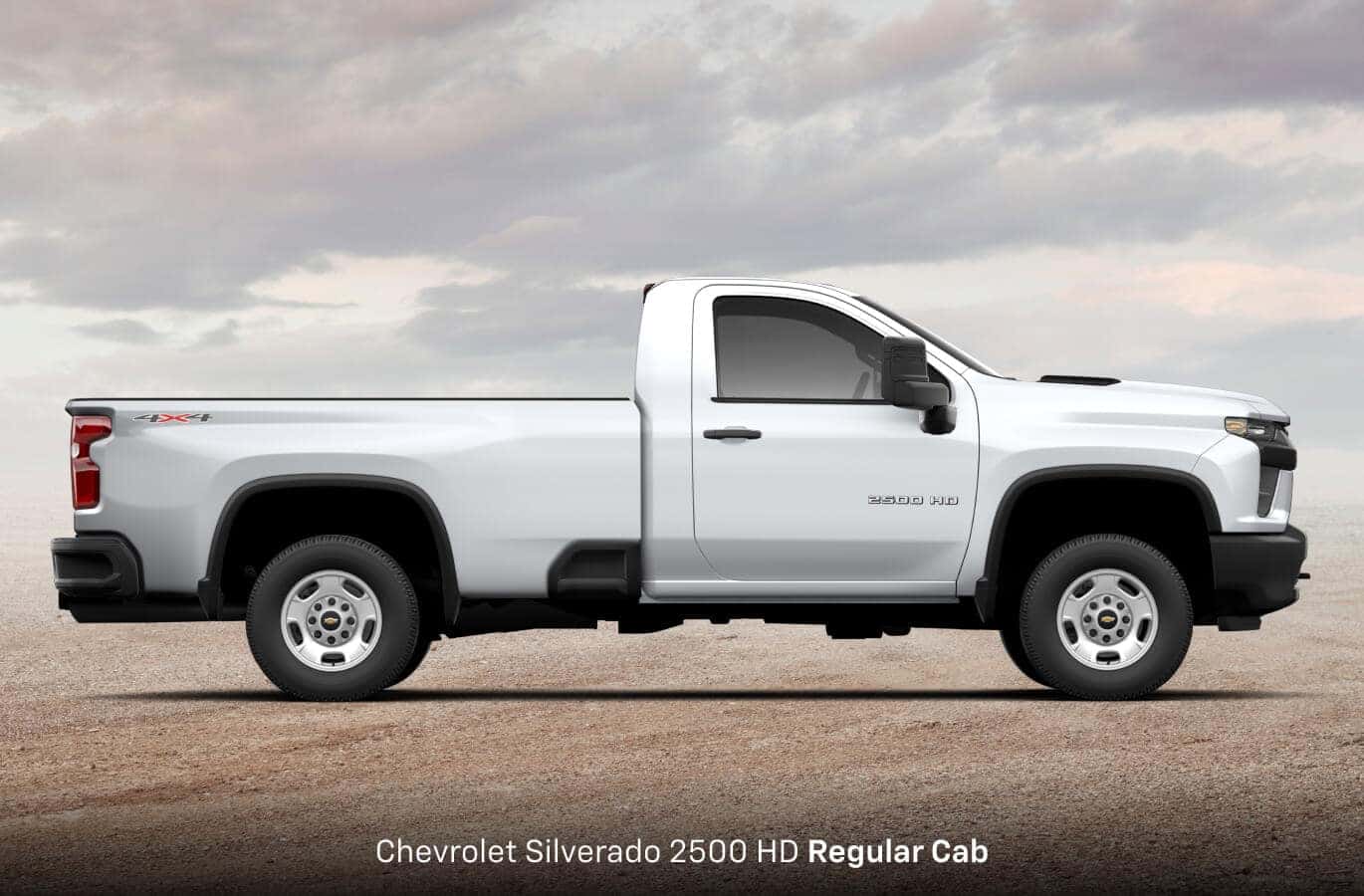
When you look at a work trucks towing capacity comparison, most of those metrics are centered around the Regular Cab Long Bed variation. That's because a Regular Cab is a two-door, three-seat vehicle with a smaller cab, which produces a lower curb weight. While there is plenty of room for the three passengers designed to sit on the bench of these pickups, you won't have a second row of seats or much interior cargo space in a Regular Cab configuration.
In most cases, Regular Cab vehicles are set up with the largest cargo beds of the pickup's lineup. They also have relatively short overall lengths because they don't have to add a second row or four doors to your cabin.
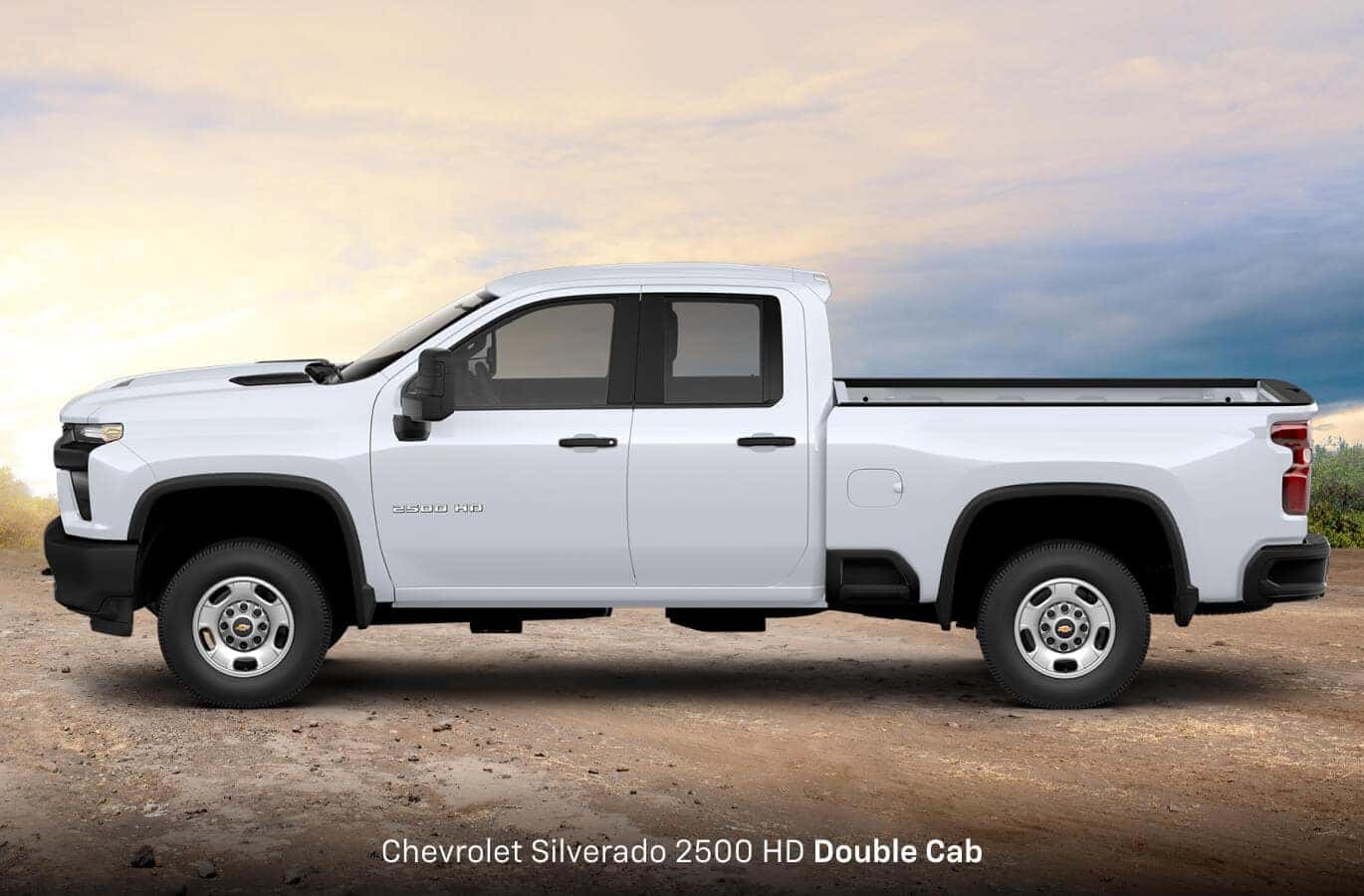
Double Cabs are the next step past Regular and introduce the four-door configuration that family trucks are known for. A second row is added to your pickup, alongside more expansive behind-the-seat storage for loose equipment or personal belongings not suitable for the exterior cargo area. Usually, the Double Cab is still small enough to get access to most bed sizes.
The extra curb weight put on by a Double Cab means that no vehicle can tow or carry quite as much with this variant. However, due to its expanded interior space and consistent access to the longest bed available to a pickup (something that larger cabs may not have access to), a Double Cab still serves a business quite well. In fact, if you have a group of employees who need to travel together while carrying large payloads, a Double Cab heavy-duty truck can easily handle most jobs.
Talking about how these two unique configurations alter your dimensions is much easier with some examples. Three of the most popular brands in the work segment – Chevy, GMC, and Ford models – all have Regular and Double Cab variants.
See how these heavy-duty trucks change with our Double Cab or extended cab vs. Regular Cab comparison charts.
Chevrolet commercial trucks, like the Silverado Heavy Duty lineup, offer some of the most staggering differences between the Regular and Double Cabs. While these configurations share front-row specs, you'll notice just how much better the Regular Cab is at gooseneck towing than its Double Cab sibling. However, in terms of conventional towing limits, the Double Cab is often competitive and sometimes the stronger option.
← Drag to scroll →
| Regular Cab | Double Cab | |
|---|---|---|
| Seating Capacity | 3 | 6 |
| Doors | 2 | 4 |
| Bed Length Options | Long Bed (98.27 in) |
|
| Headroom (Front / Rear) | 43.11 / -- in | 43.11 / 39.88 in |
| Legroom (Front / Rear) | 44.53 / -- in | 44.53 / 35.24 in |
| Overall Length (Longest Bed) | 235.59 in | 256.54 in |
| Overall Width | 81.75 in | 81.85 in |
| Overall Height | 79.94 in | 79.8 in |
| Gooseneck Towing Capacity (Max) | 22,420 lbs1 | 18,600 lbs1 |
| Payload Capacity (Max) | 3,926 lbs2 | 3,675 lbs (Long Bed)2 |
| Curb Weight (Longest Bed) | 6,074 lbs | 6,529 lbs |
| Pricing | Lower | Higher |
Similarly, GMC fleet trucks change drastically from their standard Regular Cab Long Bed configuration to the options offered by the Double Cab. You'll have spacious front-row legroom no matter what. However, where the Double Cab offers a second row and more customizability, the Regular Cab remains firmly ahead in capability – other than for conventional towing, where the Double Cab truck is slightly preferred.
← Drag to scroll →
| Regular Cab | Double Cab | |
|---|---|---|
| Seating Capacity | 3 | 6 |
| Doors | 2 | 4 |
| Bed Length Options | Long Bed (98.27 in) |
|
| Headroom (Front / Rear) | 43.11 / -- in | 43.11 / 40.12 in |
| Legroom (Front / Rear) | 44.53 / -- in | 44.53 / 35.24 in |
| Overall Length (Longest Bed) | 236.3 in | 257.24 in |
| Overall Width | 81.75 in | 81.85 in |
| Overall Height | 79.94 in | 79.8 in |
| Gooseneck Towing Capacity (Max) | 22,500 lbs3 | 18,600 lbs3 |
| Payload Capacity (Max) | 3,907 lbs4 | 3,657 lbs (Long Bed)4 |
| Curb Weight (Longest Bed) | 6,093 lbs | 6,543 lbs |
| Pricing | Lower | Higher |
Ford work trucks appear slightly different than Chevrolet and GMC options. To start, Ford refers to their "Double Cab" configuration as "Super Cab." The Super Cab is an incredibly capable version of the Ford F-250, bringing nearly identical gooseneck towing capability and payload limits to your ride.
To compensate, the F-250 Regular Cab can come in a smaller bed option, creating a compact city hauler for three employees. Ford is also more clear about just how much more internal cargo room you'll get in a Double Cab.
← Drag to scroll →
| Regular Cab | Super Cab | |
|---|---|---|
| Seating Capacity | 3 | 6 |
| Doors | 2 | 4 |
| Bed Length Options |
|
|
| Headroom (Front / Rear) | 40.8 / -- in | 40.8 / 40.3 in |
| Legroom (Front / Rear) | 43.9 / -- in | 43.9 / 33.5 in |
| Interior Cargo Space | 10.9 cu ft | 30.3 cu ft |
| Overall Length (Longest Bed) | 231.8 in | 254.4 in |
| Overall Width | 80 in | 80 in |
| Overall Height | 78.9 - 81.4 in | 79.1 - 81.5 in |
| Gooseneck Towing Capacity (Max) | 23,000 lbs5 | 22,000 lbs5 |
| Payload Capacity (Max) | 4,240 lbs6 | 4,234 lbs6 |
| Curb Weight (Longest Bed) | 5,697 - 7,011 lbs (Depending on engine) | 6,104 - 7,401 lbs |
| Pricing | Lower | Higher |
After reviewing these charts, the differences between these two configurations become much more apparent. Consider the following when purchasing a Regular Cab vs. Double Cab trucks:
← Drag to scroll →
| Feature | Regular Cab | Double Cab |
|---|---|---|
| Seats | 3 | 5 - 6 |
| Doors | 2 | 4 |
| Payload | Higher capacity | Slightly lower capacity |
| Towing | Better gooseneck towing | Slightly lower capacity |
| Best For | Heavier loads | Transporting people (crew) |
However, Regular and Double aren't the only work truck cab types to look into. Another question you may have is how the Crew Cab vs. Double Cab comparison looks. For example, the 2025 Chevy Silverado 2500 Crew Cab is a four-door, two-row option with a six-passenger seating capacity. How does that differ from a Double Cab?
Crew Cabs continue the trend started by Double Cabs by offering better interior room, typically by giving more behind-the-seat cargo space and second-row legroom. They often have similar conventional towing capacity to Double Cabs while reducing gooseneck towing capability even further. However, in the case of the Chevy Silverado 2500, additional engine and package options can make up the difference. Finally, most Crew Cab configurations lack the longest bed length or require wheelbase adjustments that further lengthen your full-size pickup, creating the hardest-to-maneuver variant of the truck.
Ready to expand your fleet with a custom-order work vehicle at your preferred dimensions? Now that you know the difference between Regular Cab vs. Double Cab trucks, we expect the process to go smoothly. If you have any more questions, contact our dealership. We'll happily go over upfitting options on our trucks and vans, the business vehicle tax deductions you can expect to benefit from, and the professional services you can access by shopping with Jim Ellis Commercial.
A Regular Cab typically has one row of seats, accommodating up to three passengers. A Double Cab truck is configured with two rows of seating and can fit up to six passengers. Since Regular Cab models are lighter, they usually offer better performance and more cargo capacity. Double Cabs, on the other hand, prioritize passenger space. Your best option depends on your specific needs.
When shopping for your next truck and comparing cab sizes, you'll notice that a Double Cab is the larger of the two. This is the case because a Double Cab comes with more rows, allowing it to accommodate more passengers than a Regular Cab. If your lifestyle or business only requires minimal seating, then a smaller Regular Cab configuration is the better choice for your pickup truck.
A Regular Cab will very often have a higher payload capacity than a Double Cab. It's only natural that it would, because Regular Cab trucks tend to weigh less than Double Cab configurations, which usually leads to higher payload capacities. This is not a guarantee, though, as truck specs can vary based on other factors. For the most accurate information on your truck's payload, contact our sales team.
Pricing for your truck depends on a wide variety of factors, including whether you lease or finance it, your trim level, and your credit profile. Thus, we can't confirm that Regular Cab models are less expensive than Double Cab options. Instead, we strongly urge you to reach out to our finance department or apply for financing on our website to get a better idea of what prices are available.
| Best Towing Trucks | Best Trucks For Construction | Best Cargo Vans For Delivery |
| Dump Truck Capacity | What is Box Truck | Plumbing Truck Customization |
1Before you buy a vehicle or use it for trailering, carefully review the Trailering section of the Owner's Manual. The weight of passengers, cargo and options or accessories may reduce the amount you can tow.
2For comparison purposes only. See the Owner's Manual and the label on the vehicle door jamb for the carrying capacity of a specific vehicle.
3GM-estimated. Maximum trailering ratings are intended for comparison purposes only. Before you buy a vehicle or use it for trailering, carefully review the trailering section of the Owner's Manual. The trailering capacity of your specific vehicle may vary. The weight of passengers, cargo and options or accessories may reduce the amount you can trailer.
4These maximum payload ratings are intended for comparison purposes only. Before you buy a vehicle or use it to haul people or cargo, carefully review the vehicle loading section of the Owner's Manual and check the carrying capacity of your specific vehicle on the label on the inside of the driver's door jamb.
5When properly equipped. See dealer for details.
6Maximum payload capabilities are for properly equipped vehicles with required equipment and vary based on vehicle configuration, accessories, and option content. Horsepower, torque, payload and towing are independent attributes and may not be achieved simultaneously.

