General Contractor Trucks & Work Vehicles Built For Your Business

2025 Ford Super Duty F-550 XL Chassis Cab in Oxford White hauling construction equipment at a job site.

Contractor trucks are usually the most crucial part of your construction, landscaping, or plumbing business. The ability to haul equipment or handle extra debris can make you a vital part of any worksite. But which truck should you consider, and when should you think about a van instead? At Jim Ellis Commercial, we’re happy to help you find your next worksite companion.

Summary

  • Full-size trucks, like the F-150 or Silverado 1500, serve as the baseline models you want to consider for towing your utility trailer or holding a service body.
  • You can consider midsize and heavy-duty trucks depending on your location or needs.
  • Our network of upfitters will help you with enclosed cargo areas, extended beds, or proper chemical storage areas.
  • Some professionals prefer vans, which have advantages and disadvantages compared to a full-size truck.
  • No matter your choice in vehicle, our finance team and tax specialists can guide you through the updated Section 179 benefits.

Which Truck Should You Buy? A Guide to Our Recommended Models

Looking for the most popular picks that contractors like you gravitate toward? Here are a few factors to keep in mind before you buy your contractor work truck:

  • Towing Capacity: Do you need to tow a 6,000-pound trailer or is it closer to 12,000 pounds? Finding a truck within that range with a comfortable amount of leeway can let you.
  • Payload Capacity: Check the trunk bed. Can it hold the materials you typically bring on the job? Will the payload capacity be enough for things like pipes or handheld machines?
  • Fuel Ratings: You can be safe and purchase a heavy-duty truck, but that'll reduce your fuel economy significantly, potentially raising the price of work. Check your vehicle's fuel economy: does it match your expectations?
  • Durability & Reliability: The best work trucks do more than just provide capability. Does the truck you chose have the right mixture of safety features and credible reliability? We at Jim Ellis Commercial take great care of contractor trucks, both in our inventory and coming in for scheduled maintenance.

Best Truck Types for General Contractors: What Should You Look For?

When looking for your next work truck, the first thing you should consider is size. As a contractor, you want a truck that can handle a multitude of jobs, from towing a utility trailer to handling plenty of cargo in the bed. As a result, we recommend one of these three truck types:

  • Full-Size: Full-size pickups, such as the Ford F-150, GMC Sierra 1500, or Chevy Silverado 1500, offer between 8,000 and 14,000 pounds of towing capacity with select configurations. That is enough to haul your utility trailer as well as heavy equipment, like pipes or a lawnmower, while keeping a spacious rear trunk open.
  • Midsize: Midsize models, like the Chevy Colorado, GMC Canyon, or Ford Ranger, are solid picks for contractors in cities or who only need to move a set, lower payload. Midsize trucks typically have a towing capacity slightly below 8,000 pounds, making them best for contractors who already know how much their equipment weighs and want to save money on fuel. These trucks are also more nimble, making it slightly easier to drive through city streets if your payload's on the lower end.
  • Heavy-Duty: While most contractors can use a full-size truck for most tasks, some may require 20,000 or more pounds of towing capacity or upwards of 8,000 pounds of payload to perform effectively at construction sites or lumber yards. If that's the case, we recommend models like the GMC Sierra 2500 HD or the Ford F-350, depending on the typical workload you have to deal with. These construction work trucks are designed to handle obstacles more effectively than full-size models.

We also sell chassis cabs if your contract work involves cross-country travel, though it's rare that contractors prioritize those commercial work trucks.
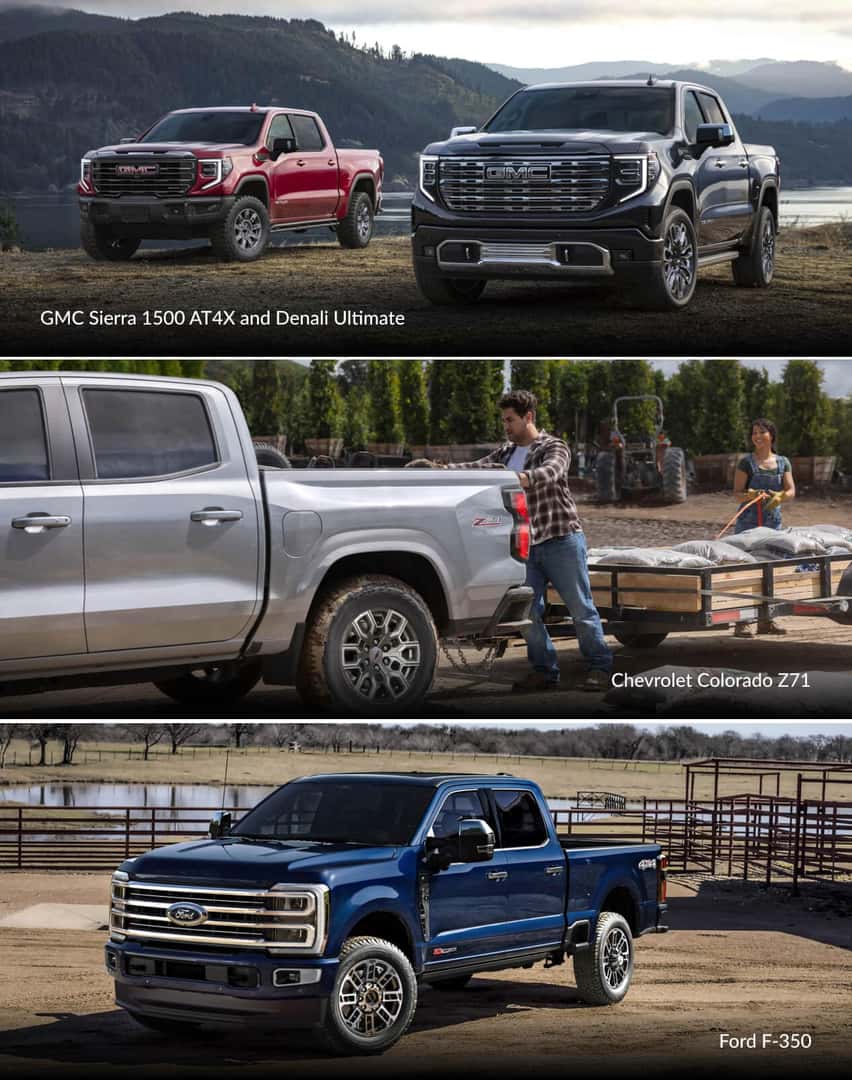
Top: 2026 GMC Sierra AT4X and Denali Ultimate. Middle: 2026 Chevrolet Colorado Z71. Bottom: blue Ford F-350.

Work Truck Organization & Setup: How Do You Properly Upfit Your Work Truck?

Having proper work truck organization can serve you well when getting your truck ready for a day of work. At Jim Ellis Commercial, we're proud partners with dozens of upfitting programs across the nation. Check out just a handful of services we've helped our community through:

  • Body Upfits: A common contractor truck setup is known as a service body, which includes enclosed shelving on the exterior. Easily access your tools, or lock them up when you don't need them anymore.
  • Hooks, Wedges & Divots: Popular contractor truck accessories include places to hang items such as ladders and your handy toolkit. Get materials that properly fit your work truck when you work with our team.
  • Truck Caps: Cover your gear from rain or snow with a truck cap. This transforms your truck into a compact van, letting you have the best of both worlds.
  • Towing Supplements: If you're dealing with intense towing consistently, consider adding support for gooseneck towing, a more efficient cooling system, or bolder suspension.

Ready to craft your perfect model? You can custom order your midsize, full-size, or heavy-duty trucks to your liking, ensuring you have a service body or ladder hooks pre-installed.
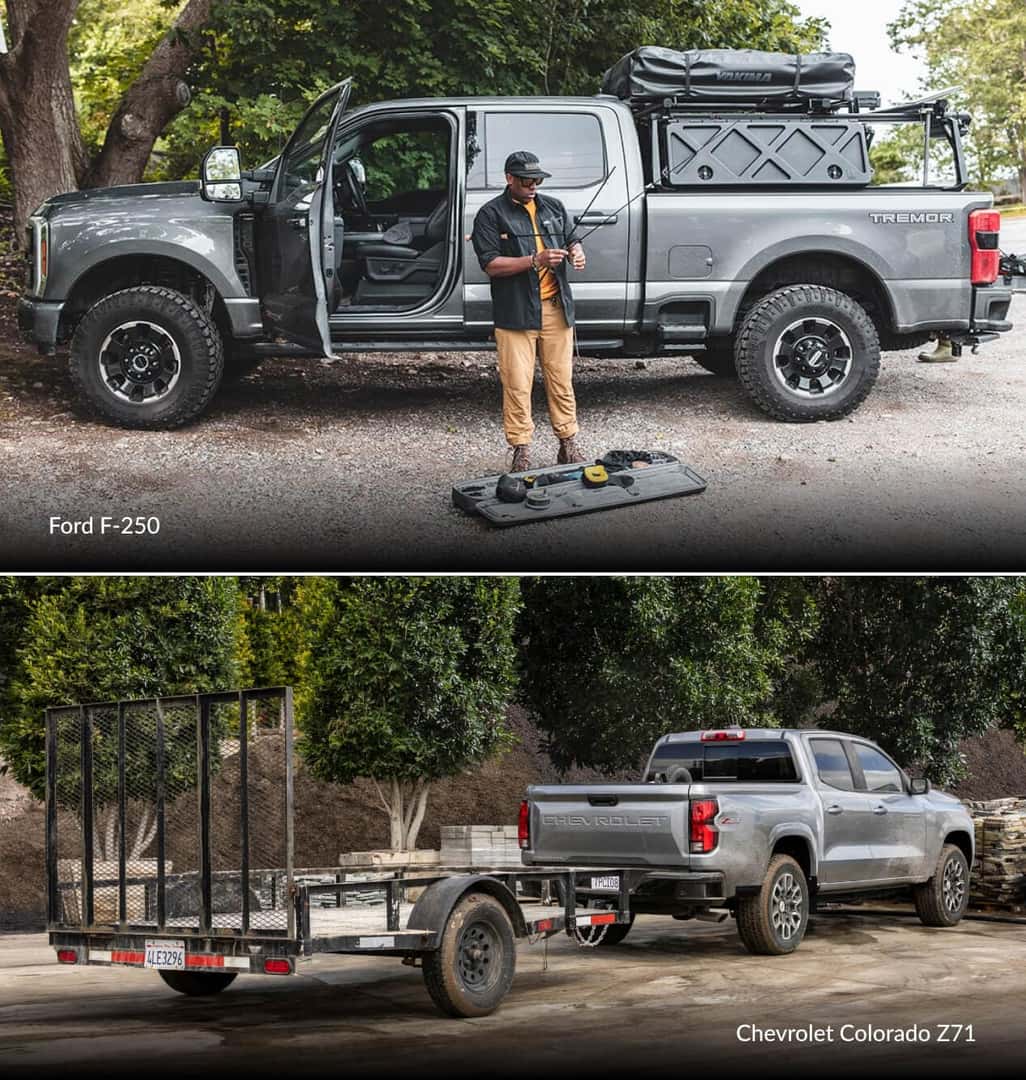
Top: Ford F-250 Super Duty Lariat Tremor in Stone Gray Metallic. Bottom: 2026 Chevrolet Colorado Z71 towing a trailer.

Contractor Vans: When Should You Choose a Van Over a Truck?

However, there is another category of vehicles to consider: cargo vans. Many contractors adore cargo vans, and it's easy to see why. Let's see the advantages and disadvantages of choosing contractor vans over trucks.
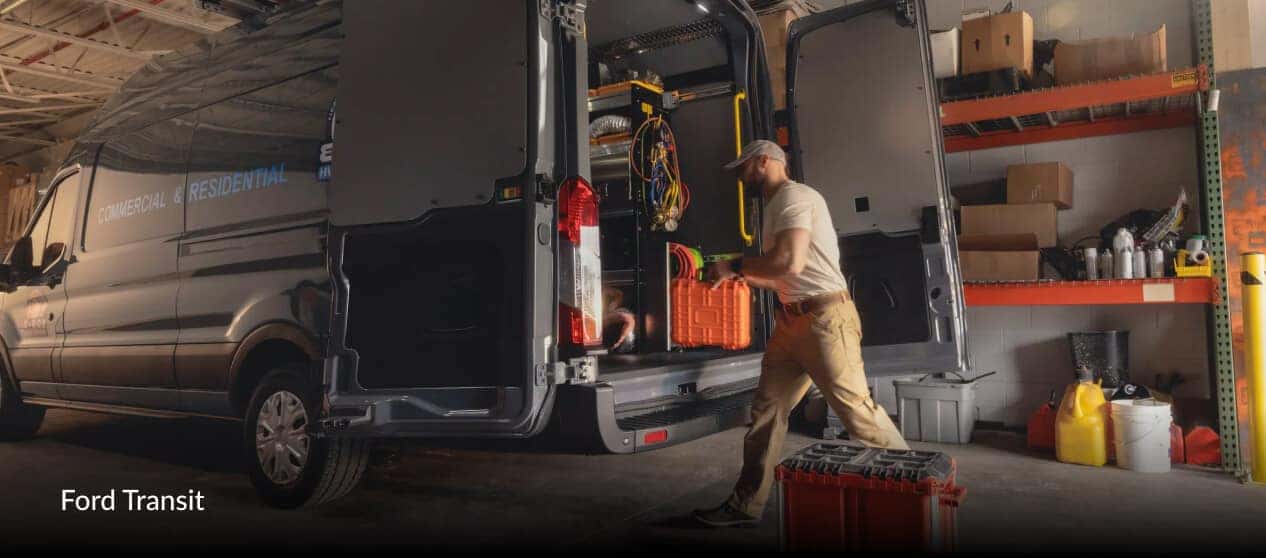
2025 Ford Transit Cargo Van High Roof in Carbonized Gray Metallic as a worker loads equipment inside a service garage.

Pros & Cons of a Work Van

Pros

  • Enclosed roof: Without needing add-ons, the work van is already closed off, keeping your gear safe from rain or thieves.
  • Easy hooks and handles: More walls and a roof means more space to store equipment.
  • Shelving options: Enjoy interior and exterior shelving, unlike the mostly exterior shelving of a service body truck. This is especially useful for chemical hoses, like pesticides.

Cons

  • Typically lower towing capacity: Vans rarely have the same degree of towing capability as their truck equivalent.
  • Few heavy-duty options: While vans have excellent payload capacity, most vans do not provide a heavy-duty chassis, and the extra shelves and body weight mean you'll have less payload to work with overall.

Tax Incentives & Section 179: How Do You Get Rebates for a Work Truck Purchase?

When you invest in a work vehicle for your business, you may benefit from Section 179 tax rebates. These incentives can allow you to deduct up to $2,560,000 in business expenses for a work vehicle used for business purposes more than 50% of the time.1 You'll enjoy 100% bonus depreciation after Section 17, and you can enjoy these deductions even if you purchased used equipment, but only if your vehicle falls under the following categories:1

  • You're using a non-passenger vehicle. This does not mean models like a Ford Transit Passenger; it refers to models used primarily for passenger transportation.1
  • Your truck or van has a Gross Vehicle Weight Rating (GVWR) of at least 6,000 pounds.1
  • They must be in service by the end of the tax year.1

This covers all of the models we recommend for your business, from the F-150 to the Chevy Express. If you have more questions about how you and your business can benefit from a tax deduction in 2026, we encourage you to reach out to our financing team or consider talking with your personal tax expert.
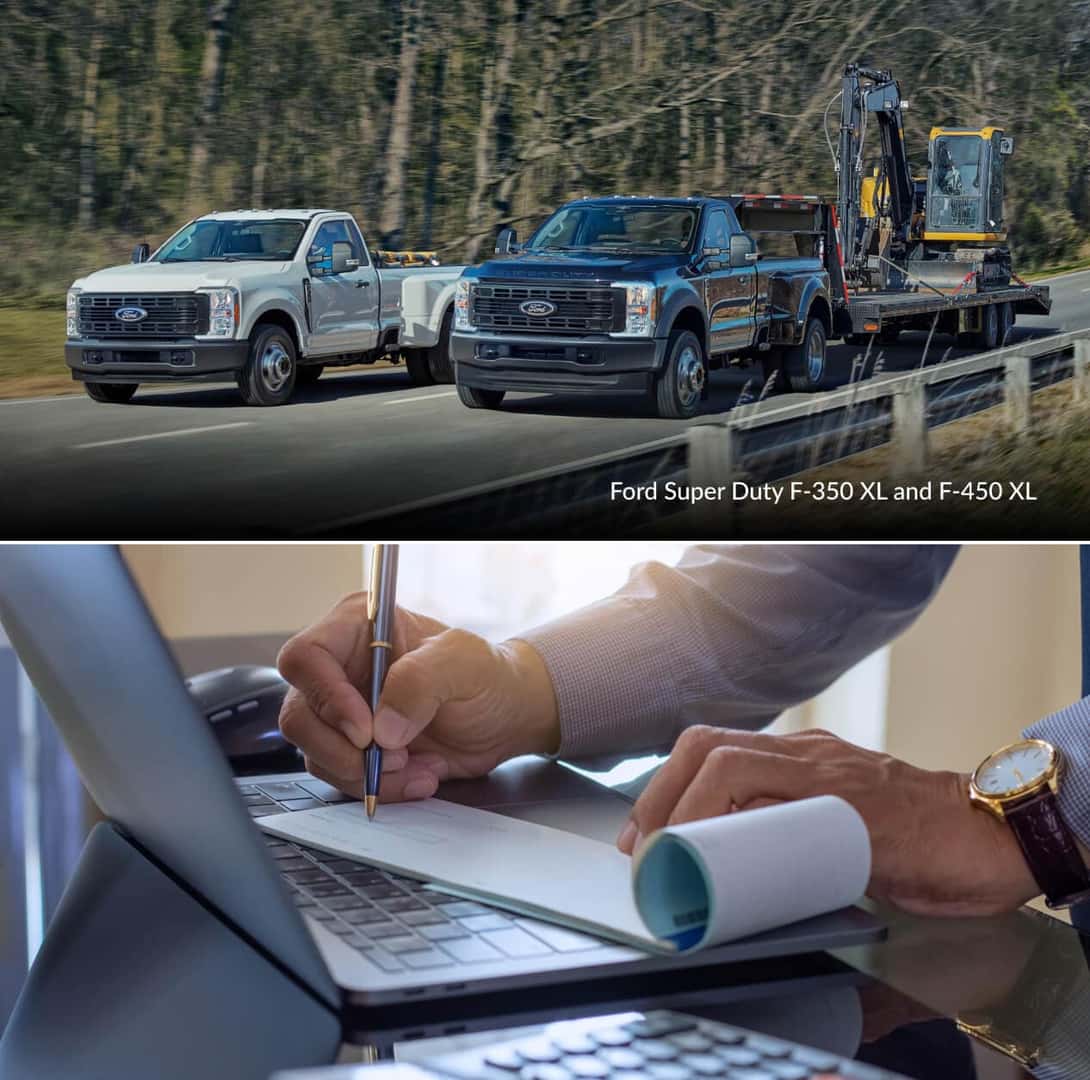
Top: 2026 Ford Super Duty F-350 XL and F-450 XL hauling equipment. Bottom: person completing paperwork on a laptop.

Find Contractor Trucks & Vans at Jim Ellis Commercial

Are you ready to take the next step in your business? Whether you're adding new members to your fleet or replacing an old truck, our team at Jim Ellis Commercial is here to introduce you to a consistent, powerful, and reliable vehicle. You can call ahead and custom-order the truck to your specified upfitting, like adding a body, or see if a van would better match your business needs.

Contractor trucks require proper maintenance to remain work-ready: let us be your go-to location! We at Jim Ellis Commercial work with a family of licensed technicians across Georgia, so you can find a high-quality service bay in no time.

Frequently Asked Questions

What truck do most general contractors use?

The most popular trucks for general contractors are full-sized, such as the Chevy Silverado 1500 or Ford F-150. These models are useful for pulling full-sized travel trailers, hefting machinery like lawnmowers, and having enough bed space for enclosed storage units. However, many contractors also consider vans to be useful for keeping your equipment safe from rain or thieves.

What size truck do I need for construction work?

For construction work, we highly recommend considering a heavy-duty model, like the GMC Sierra 2500 HD or Ford F-250. Even if you don't believe you will consistently tow over 20,000 pounds (when properly equipped), the sturdier frame and heavy-duty suspension of these models let you more confidently conquer obstacles on the worksite. The Sierra 3500 HD or Ford F-350 may be required for extraordinary payloads.

Can I write off a contractor truck?

Depending on your workplace situation, you may be able to write off a significant portion of your contractor truck's depreciation under Section 179, as long as it is used for business more than 50% of the time.1 Before investing, contact your tax specialist to learn more about your specific business, how the weight of your model affects Section 179 returns, and how much of a deduction you can expect.


More from Jim Ellis Commercial Division

  • Trailer Hitch Classes Guide

    You’ve just opted for one of our commercial vehicles and you’re getting ready to take on Atlanta jobs. If your job consists of towing a trailer or some kind of equipment behind your vehicle, you’ll likely have to opt for a trailer hitch. But, did you know that there are different types of trailer hitches?…

  • Benefits of Passenger Van Transportation

    When you need to transport a crowd, there’s no better choice than passenger van transportation. Passenger vans offer major convenience, allowing businesses to safely carry 15 guests or more, and Jim Ellis Commercial Division has a wide variety of options for your Buford business and beyond. Take a closer look at the passenger van interior, and discover why…

  • Work Truck Storage Ideas

    Whether you’ve got a new utility body or service body accompanying you on the job, that’s just the first step in allowing yourself to get the job done right. In addition to having a dependable and capable truck, you’ll want to do your best to keep your work truck organized so that you have easy…


1This information is not verified by the official manufacturer and shall serve solely as unofficial general information. For details, visit: https://www.congress.gov/bill/119th-congress/house-bill/1/text

Contact Us

Jim Ellis Commercial Division 34.080170, -83.987494.