
Searching for the best truck for landscaping can quickly become overwhelming, especially if your business requires a capable and reliable fleet right away. Since landscaping is a broad field, there are several trucks that you can consider for different types of jobs. For example, a crew that trims lawns and hedges may not require the same truck as a team who regularly moves yards upon yards of sand, gravel, or even stone.
The team at Jim Ellis Commercial has compiled this guide to help you determine which of our lawn care truck options is the right one for your business. Below, we'll review different categories of vehicles and outline which specific options might fit your landscaping necessities.
When shopping for new landscaping vehicles, it's important to take every factor into consideration to avoid creating challenges during your workday. For example, you'll have to balance hauling ability, versatility, durability, and raw power. Some landscaping jobs call for hauling yards of mulch, dirt, or sand; teams who regularly complete this type of work have different requirements than workers who tend lawns or yards with power tools.
Below, we'll outline some of the different landscaping trucks that you might select for your fleet or small business.
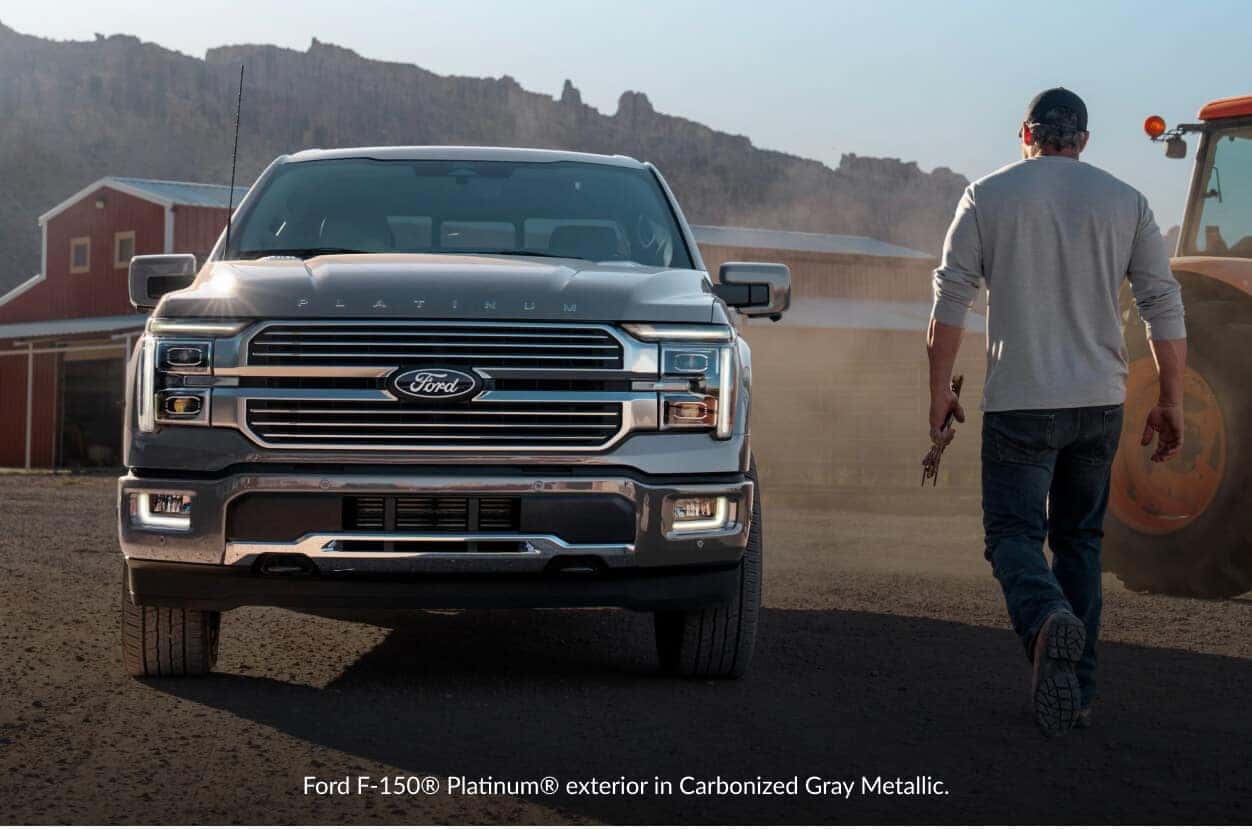
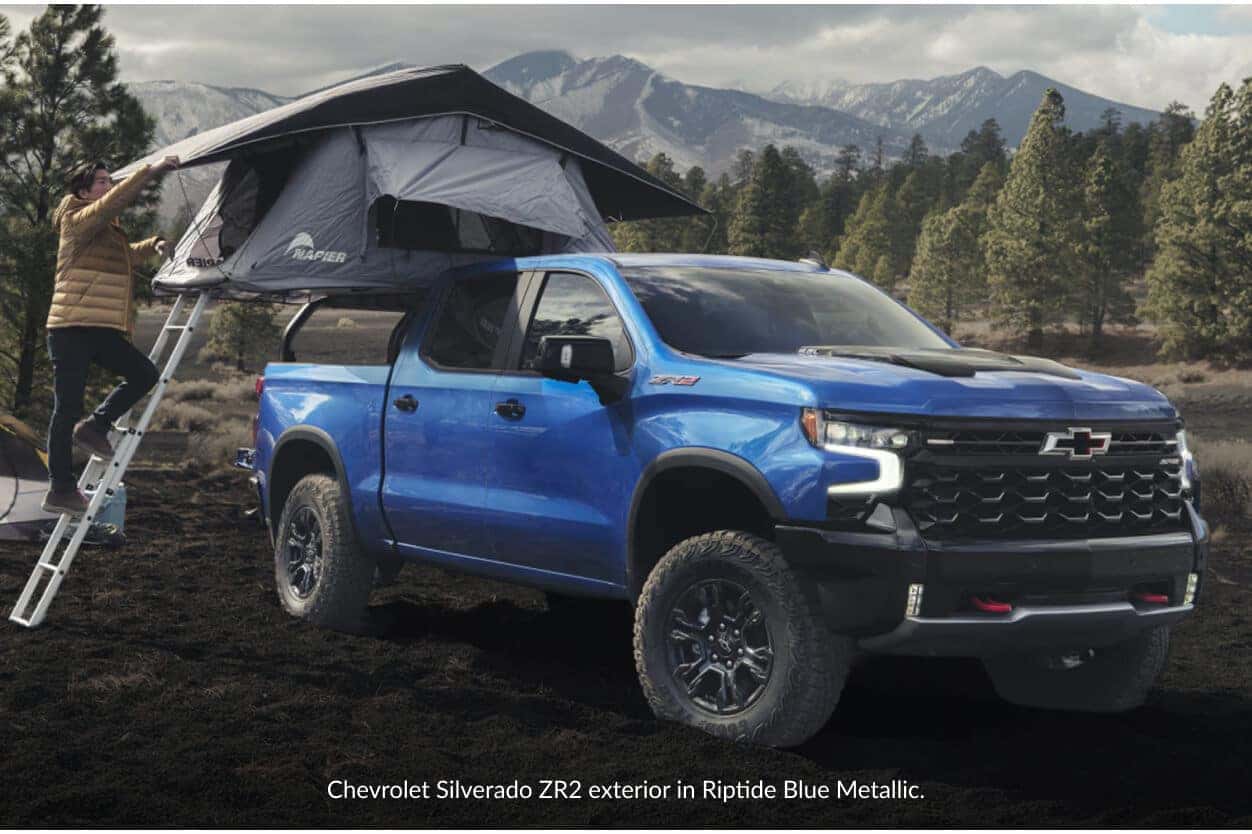
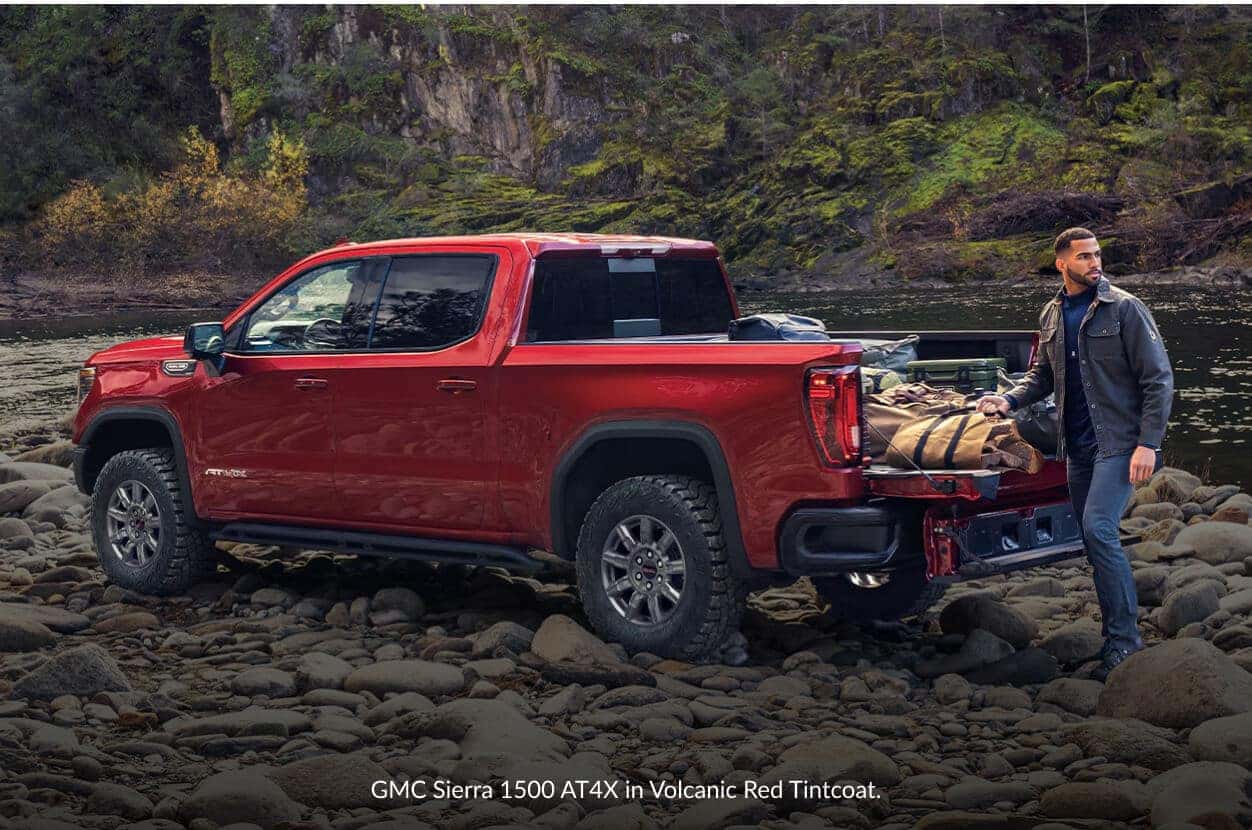
For some businesses, the landscaping pickup truck that best fits their needs will be a light-duty, full-size model. Some common examples include the Ford F-150, Chevy Silverado 1500, and GMC Sierra 1500. These vehicles provide a compelling blend of versatility, towing capacity, and muscle. Their larger siblings, like the Ford F-250, promise similar versatility with even more power. Although fuel efficiency on larger models is lower, their strength more than makes up for it.
When you're considering trucks in this category, you'll have several important decisions to make. One of them is the size of the truck's cabin; do you want a pickup that seats five or six people, or is a single row of seating sufficient? You can learn more about these options by reviewing our regular cab vs. double cab trucks page.
Visit the Jim Ellis Commercial showroom today to learn more about the various full-size trucks we stock on our lot – and the numerous upfits you can have added to them!
If your business is regularly delivering multiple cubic yards of dirt, gravel, or other landscaping materials, then a dump truck may be more suitable. These models are rather specific in their capabilities: they are designed to haul prodigious quantities of materials like sand or mulch, as opposed to heavy power tools that stay in one spot.
Dump trucks can be built onto chassis cab bodies. This means that the best dump truck for landscaping may be based on a Chevrolet Silverado 5500 HD work truck or a similar model. You can go even larger, however, if your business calls for it.
While box trucks are not used for landscaping as often as traditional pickups or dump trucks, they can still help companies achieve several tasks quite well. Say you want to haul cargo while it's raining – a box truck allows you to transport material, like sand, without exposing it to the elements. You can park and leave the truck stationed for as long as desired without worrying about your materials becoming compromised.
A landscaping box truck lets you store tools, plants, and mowers – all in one place. You can customize the interior with storage racks for equipment while still having plenty of open space for bags of grass clippings, large bins for landscaping waste, and any other boxes of materials you have to haul.
There are plenty of considerations to make when selecting a vehicle for your landscaping work. This process can become overwhelming, as different trucks offer varying perks. Below, we'll discuss payload capacity, bed size, towing capacity, crew size, fuel economy, and equipment storage to help you pinpoint the best match.
The payload capacity of a truck represents the amount of weight that the vehicle can carry. This includes passengers, added accessories like roofing racks, and any tools or equipment you put inside the truck's bed and cabin. The higher the payload rating, the more you can carry to the jobsite.
Towing is similar – a truck's maximum towing capacity is the amount of weight it can pull behind it. It's worth noting that these two capacities are related: since a tow hitch does transfer some weight to the truck, you cannot generally max out both numbers at the same time. Please contact us today to learn more about this relationship.
The size of your truck's bed has, of course, an important impact on what the vehicle can carry. When you're picking out the best truck for landscaping, you'll likely want a longer bed that provides more storage capacity.
Crew size refers to the number of people that can fit in the cab of a pickup. Some models have single rows of seating in the front; these trucks often have rather large beds. Others have two rows of seating in their cabs, which can come at the expense of room in the bed.
While bigger can be better when it comes to landscaping trucks, a larger vehicle does impact its fuel economy. The EPA does not publish estimates for commercial landscaping trucks and their gas mileages, but you can expect larger trucks to cost more at the pump. However, this isn't necessarily a negative factor; in fact, it could be to your advantage. A dump truck that lets you take one trip instead of three may require less fuel to move the same materials than a smaller vehicle overall.
Look for customized storage solutions, like tool racks that are designed to fit string trimmers, hedge trimmers, rakes, lawn aerators, and other essential pieces of equipment that are longer to store. Keep in mind that while some vehicles, like dump trucks, boast plenty of storage space, they may not be ideal for businesses that have to transport a lot of tools and materials. After all, you don't want your mowers mixed in with yards of mulch or topsoil.
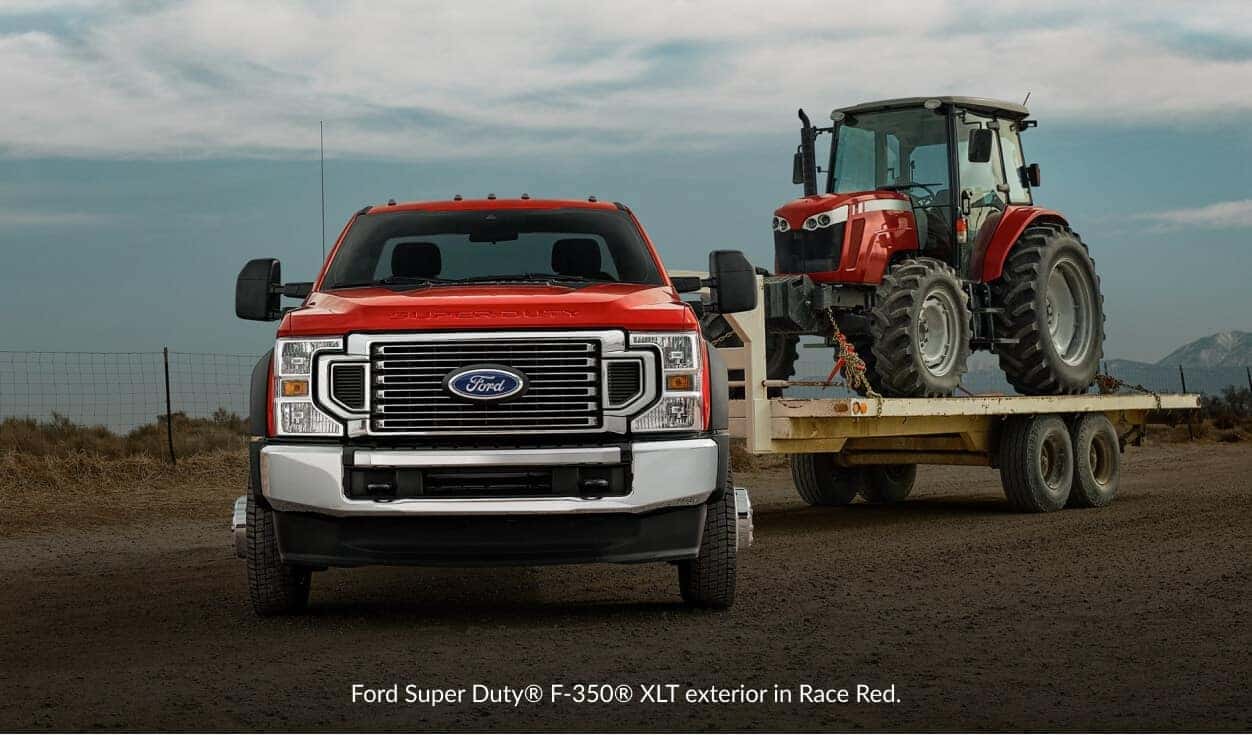
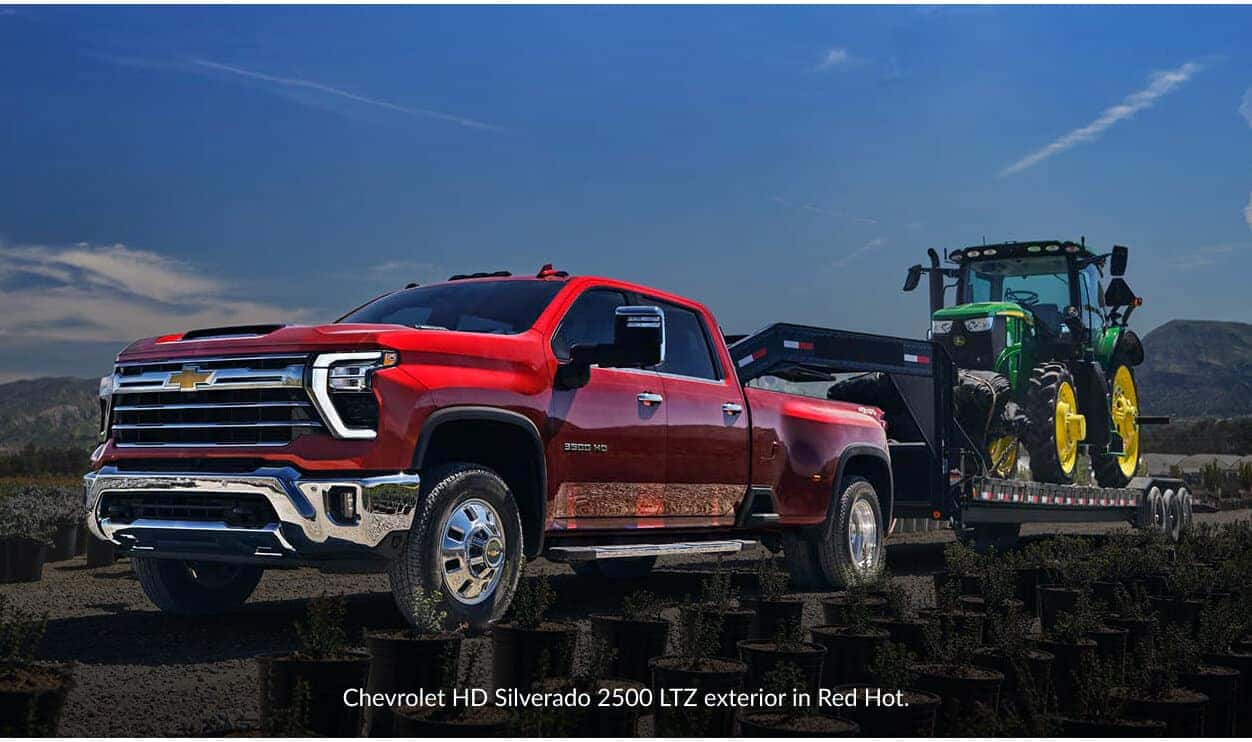
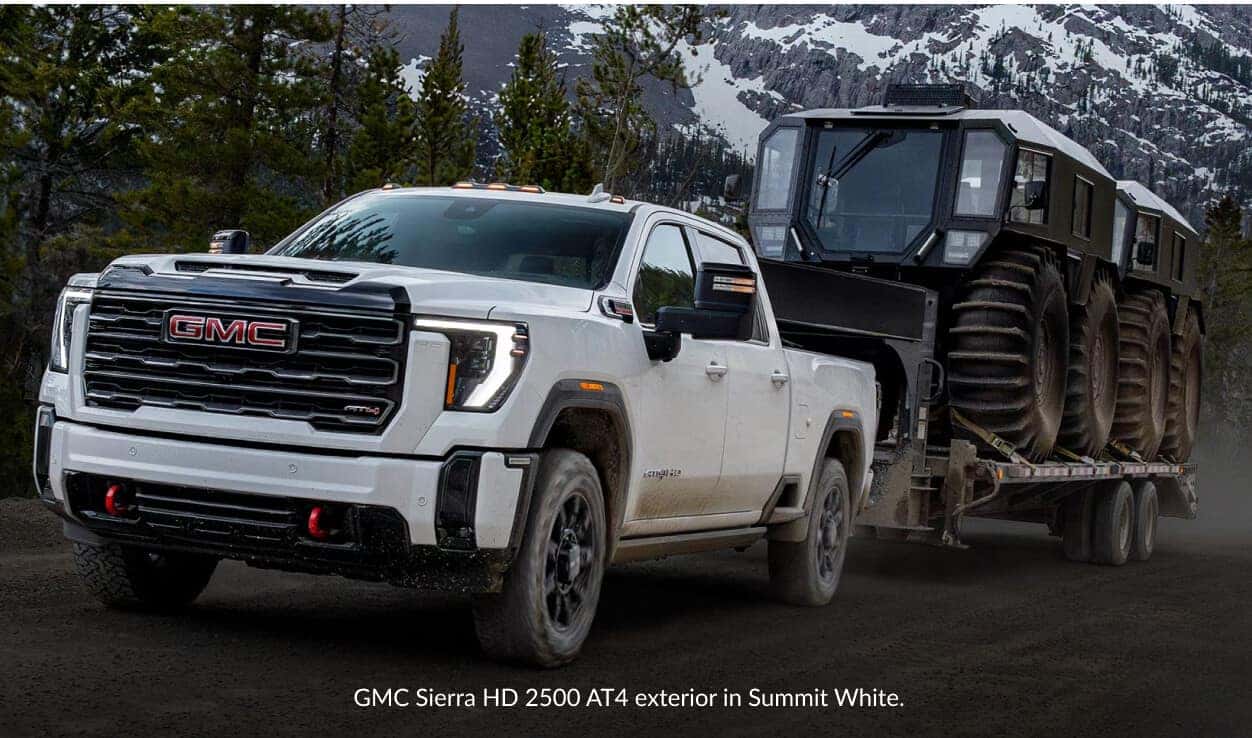
As we noted above, when you're deciding on the best truck for landscaping for your business, you'll likely consider factors like payload and towing capacity. The chart below lays out the maximum ratings for several popular models:
| Max Towing Capacity | Max Payload Capacity | |
|---|---|---|
| 2026 Ford F-150 | 13,500 lbs1 | 2,440 lbs2 |
| 2026 Ford Super Duty | 40,000 lbs1 | 8,000 lbs2 |
| 2026 Chevy Silverado 1500 | 13,300 lbs3 | 2,260 lbs4 |
| 2026 Chevy Silverado HD | 36,000 lbs3 | 7,442 lbs4 |
| 2026 GMC Sierra 1500 | 13,300 lbs5 | 2,280 lbs6 |
| 2026 GMC Sierra HD | 36,000 lbs5 | 7,290 lbs6 |
Contact the Jim Ellis Commercial staff today to learn more about the various towing trucks you can purchase for your business.
There are numerous upfit options to consider when you're hunting for the right landscaping trucks. Side-mounted storage compartments let you keep tools organized, while cages with locks allow you to store machinery in your truck overnight without worrying about theft. With commercial vehicle uplifts, you can build the best truck for landscaping.
Whether you want to personalize a truck you currently have, purchase a new commercial vehicle, or simply discuss your options, the Jim Ellis Commercial team is excited to work with you. We can help you start your small business or build out your fleet as you expand and flourish.
Reach out to us today to talk about our commercial vehicle financing opportunities and schedule a tour of our inventory.
The best truck for landscaping depends on your business requirements. Teams that deliver multiple yards of wood chips, fill dirt, or gravel will want a heavy-duty option, such as a dump truck or a Ford F-350. On the other hand, companies that rely on hand tools, like hedge trimmers, will likely prefer light-duty full-size models such as the Chevy Silverado 1500 or Ram 1500.
If your landscaping business regularly brings yards' worth of materials to jobsites, then a dump truck may be exactly what you're looking for, as you'll typically make far fewer trips. Teams who maintain lawns or parks, however, will likely benefit from the versatility of a pickup truck, which can be equipped to easily transport large numbers of tools, such as handheld weedwhackers.
The answer to this question depends on your necessities. If you simply have to be able to tow a mower, then a maximum towing capacity measured in four figures will likely be sufficient. Those who need to tow multiple yards of sand or gravel, on the other hand, will likely benefit from a heavy-duty model that can tow tens of thousands of pounds.
You’ve just opted for one of our commercial vehicles and you’re getting ready to take on Atlanta jobs. If your job consists of towing a trailer or some kind of equipment behind your vehicle, you’ll likely have to opt for a trailer hitch. But, did you know that there are different types of trailer hitches?…
When you need to transport a crowd, there’s no better choice than passenger van transportation. Passenger vans offer major convenience, allowing businesses to safely carry 15 guests or more, and Jim Ellis Commercial Division has a wide variety of options for your Buford business and beyond. Take a closer look at the passenger van interior, and discover why…
Whether you’ve got a new utility body or service body accompanying you on the job, that’s just the first step in allowing yourself to get the job done right. In addition to having a dependable and capable truck, you’ll want to do your best to keep your work truck organized so that you have easy…
1When properly equipped. See dealer for details.
2Maximum payload capabilities are for properly equipped vehicles with required equipment and vary based on vehicle configuration, accessories, and option content. Horsepower, torque, payload and towing are independent attributes and may not be achieved simultaneously.
3Before you buy a vehicle or use it for trailering, carefully review the Trailering section of the Owner’s Manual. The weight of passengers, cargo and options or accessories may reduce the amount you can tow.
4For comparison purposes only. See the Owner’s Manual and the label on the vehicle door jamb for the carrying capacity of a specific vehicle.
5GM-estimated. Maximum trailering ratings are intended for comparison purposes only. Before you buy a vehicle or use it for trailering, carefully review the trailering section of the Owner’s Manual. The trailering capacity of your specific vehicle may vary. The weight of passengers, cargo and options or accessories may reduce the amount you can trailer.
6These maximum payload ratings are intended for comparison purposes only. Before you buy a vehicle or use it to haul people or cargo, carefully review the vehicle loading section of the Owner’s Manual and check the carrying capacity of your specific vehicle on the label on the inside of the driver’s door jamb.

